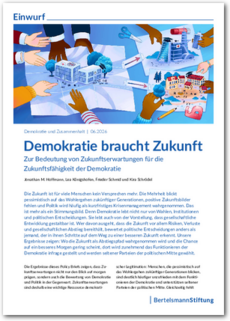
Sixty-eight percent of people in Germany lack a positive vision for society’s future. They criticize the fact that political decisions today rarely reflect long-term ideas (60 percent). Added to this is widespread pessimism: 52 percent believe that future generations in Germany will be worse off than those living there today. These are the findings of a representative survey conducted by the Bertelsmann Stiftung for the study Demokratie braucht Zukunft (Democracy Needs a Future), which the nonprofit foundation carried out in collaboration with YouGov.
However, when we look at the younger generation, a different, more positive picture emerges: Young people are less dissatisfied with democracy and significantly more optimistic than many older people. Only one-third (31 percent) of 18- to 29-year-olds are dissatisfied with how the political system works, while among 40- to 49-year-olds, the figure is nearly half (44 percent). Above all, young people are willing to align political decisions more closely with the needs of future generations.
“In the spirit of intergenerational justice, we must provide young people in Germany and Europe today with the conditions and opportunities they need to participate – along with a clear, sustainable vision of the future,” said Brigitte Mohn, chairwoman of the Bertelsmann Stiftung Executive Board, commenting on the foundation’s research on the younger generation. “Only when young people assume responsibility early on, contribute their ideas and experience a sense of self-efficacy will they be able to take an active role in developing our democratic and social systems in the coming decades. This is precisely where we want to support the younger generation. We want to shape a better future.”
Link to the study: Demokratie braucht Zukunft
“We can clearly see that young people are committed to improving the future prospects of our society and economy,” said Andreas Pinkwart, former Deputy Minister-President of North Rhine-Westphalia and a member of the foundation’s Executive Board since July 1, 2026. “And they are doing so not only through their support for democracy, but also by focusing on sustainability in the economy. Young people are one of the biggest drivers of the sustainability transformation, and they endorse the model of the social market economy.”
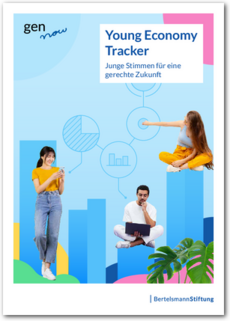
A key finding of the Bertelsmann Stiftung’s Young Economy Tracker is that young people view merit and solidarity as inseparable. In Germany, 16- to 25-year-olds support the model of the social market economy: A large majority of them believe that a just society must both reward merit and ensure equal opportunities.
Link to the study: Für junge Menschen gehören Leistungsprinzip und Solidarität zusammen
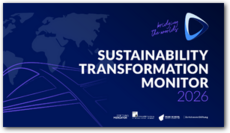
The Bertelsmann Stiftung’s Sustainability Transformation Monitor, which tracks the progress the German economy is making towards sustainability, shows that the younger generation is one of the main drivers of this transition, which has recently slowed down.
Link to the study: Nachhaltigkeit bleibt in Unternehmen Chefsache – doch die Dynamik ist dahin
To understand how young people are participating in the current political discourse, the Bertelsmann Stiftung has already examined in two widely acclaimed studies the next generation’s social media behavior and how it is being influenced. The study How to Sell Democracy Online (Fast) clearly shows that the majority of young people get their information about political events from social media, such as Instagram and TikTok. In doing so, they trust political influencers more than political organizations, institutions or politicians themselves.
Link to the study: Social Media sind essenziell, um junge Menschen mit politischen Themen zu erreichen
But what kind of content do younger people see there? The answer is provided by the study Digitalisiert, politisiert, polarisiert? (Digitized, Politicized, Polarized?), which examined young people’s social media feeds on TikTok, YouTube, Instagram and X in the run-up to Germany’s 2025 national election. The study shows that videos from parties on the political fringes appear more frequently in users’ feeds, while posts from the political center can be found less often. Even if centrist parties post more frequently relatively speaking, they are less visible in the feeds of younger users.
Link to study: Algorithms in Election Campaigns
It is striking that while the younger generation is less dissatisfied with democracy, older people participate more actively in elections. The study Hürdenlauf zur Wahlurne (Obstacle Race to the Ballot Box) explains what policymakers, government officials and civil society can do now to increase voter turnout among young people. After all, the participation of young people in political discourse is crucial to democracy’s ongoing legitimacy. And it ensures that policymaking decisions take a long-term perspective and are sustainable.
Link to study: Warum junge Menschen seltener wählen – und was dagegen hilft