Kinder

Growing Up in Wellbeing

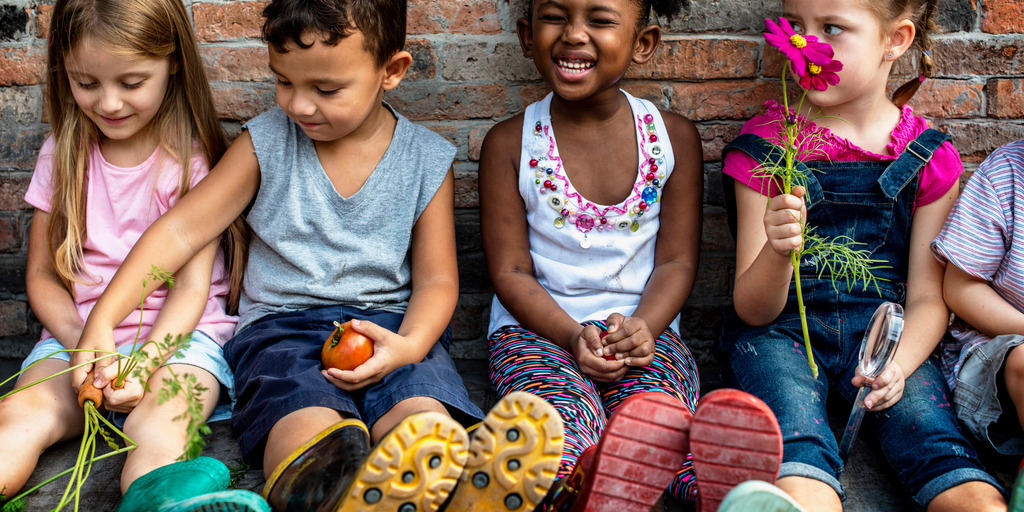
All children have the right to grow up safe and healthy, to learn, pursue their interests, and have a say in the decisions that affect their lives. 

Yet for many children in Germany—especially those growing up in disadvantaged circumstances—good opportunities for education and social participation, self-efficacy and meaningful participation are still far from guaranteed. 

Support too often fails to reach those who need it most, responsibilities are often fragmented, and children's perspectives are still not heard systematically enough. 

This is where the Growing Up in Wellbeing project comes in. 

It focuses on the following areas: 


Contact persons:

Foto Antje Funcke
Antje Funcke
Senior Expert
Foto Sarah Menne
Sarah Menne
Senior Project Manager
Foto Simone Aistermann
Simone Aistermann
Project Manager
Foto Lena Budach
Lena Budach
Project Manager
Foto Ruth Kordtomeikel-Hiller
Ruth Kordtomeikel-Hiller
Project Assistant
Foto Stephanie Swinburne
Stephanie Swinburne
Project Assistant

Content

The Education and Participation Package

The Education and Participation Package (Bildungs- und Teilhabepaket, BuT), a package of monetary and in-kind social benefits in Germany, is intended to ensure that children in low-income families have access to education and leisure activities—for example through free school meals, support for school supplies, hobbies or tutoring. Yet these benefits too often fail to reach the children that are entitled to them. Many families are unaware of the BuT benefits, while others are discouraged by the administrative burden involved in applying. In addition, the benefits are not sufficiently grounded in empirical evidence and therefore do not adequately reflect children's actual needs for education and participation. 

Together with experts from municipalities, public administration, start-ups and academia, we are developing practical solutions to increase the take-up of BuT benefits. In doing so, we build on the proposals of the Commission on the Welfare State. 

Children’s Conferences: “Future Voices: Now It’s Our Turn!”

By scaling our children’s conference format “Future Voices: Now It’s Our Turn!” for children under the age of 14, we create easily accessible opportunities for participation in schools and municipalities. At the heart of the conferences is a peer-to-peer approach: young people moderate the conferences and, in trust-based workshops closely linked to the everyday lives of participating children, explore their needs, concerns and demands. At the end of each conference, children can present these directly to policymakers, public administration and schools. 

The conferences give decision-makers concrete insights into the local realities of children’s lives and provide impulses for action. Children experience that their voices are being heard. To make it possible to track how children’s ideas are implemented locally, the conference results are documented transparently in a dashboard. 

Mentoring 

Mentoring programmes can effectively support children growing up in disadvantaged circumstances by opening up new opportunities for experience, development and participation. Local civil society organisations and companies can help create the conditions for children to thrive. We want to help mentoring reach more children. 

Social Spaces for Children

Children need places close to home where they can meet others and find room to develop and gain new experiences outside formal educational institutions. These places make an important contribution to children’s personal development. They are spaces where values and democracy are lived and experienced. We want to showcase good examples of such social spaces for children in Germany and internationally, and support their wider dissemination. 

Conclusion

Overall, the Growing Up in Wellbeing project brings together data, practice and participation in an approach that not only describes problems, but also drives change—in municipalities and schools, in cooperation between federal and state governments, and in partnership with civil society and practitioners, with children and young people as active participants.