[Translate to English:] Die Flagge der Europäischen Union

New EU Budget Navigator maps competing priorities for Europe’s next long-term budget

As negotiations on the EU’s next long-term budget gather pace, we are launching our EU Budget Navigator. The online tool allows users to compare the positions of the European Commission, Parliament and Council, track shifting priorities and explore their own budget scenarios.

Contact person

Foto Anna Heckhausen
Anna Heckhausen
Project Manager

Content

Today, we are launching the EU Budget Navigator as negotiations on the next EU budget enter a decisive phase. With different positions on the table, keeping track of the negotiations is becoming increasingly difficult. The EU Budget Navigator aims to address this issue. 

The online tool consolidates positions of the European Commission, the European Parliament and the Council in one place. It allows users to compare proposals, track evolving priorities and build their own scenario for the EU’s next long-term budget. Anna Heckhausen, our Expert on the EU Budget, says: “The EU Budget Navigator makes complex budget structures and political trade-offs more transparent and accessible. The tool brings clarity to the political choices that will determine the EU’s priorities for years to come.”
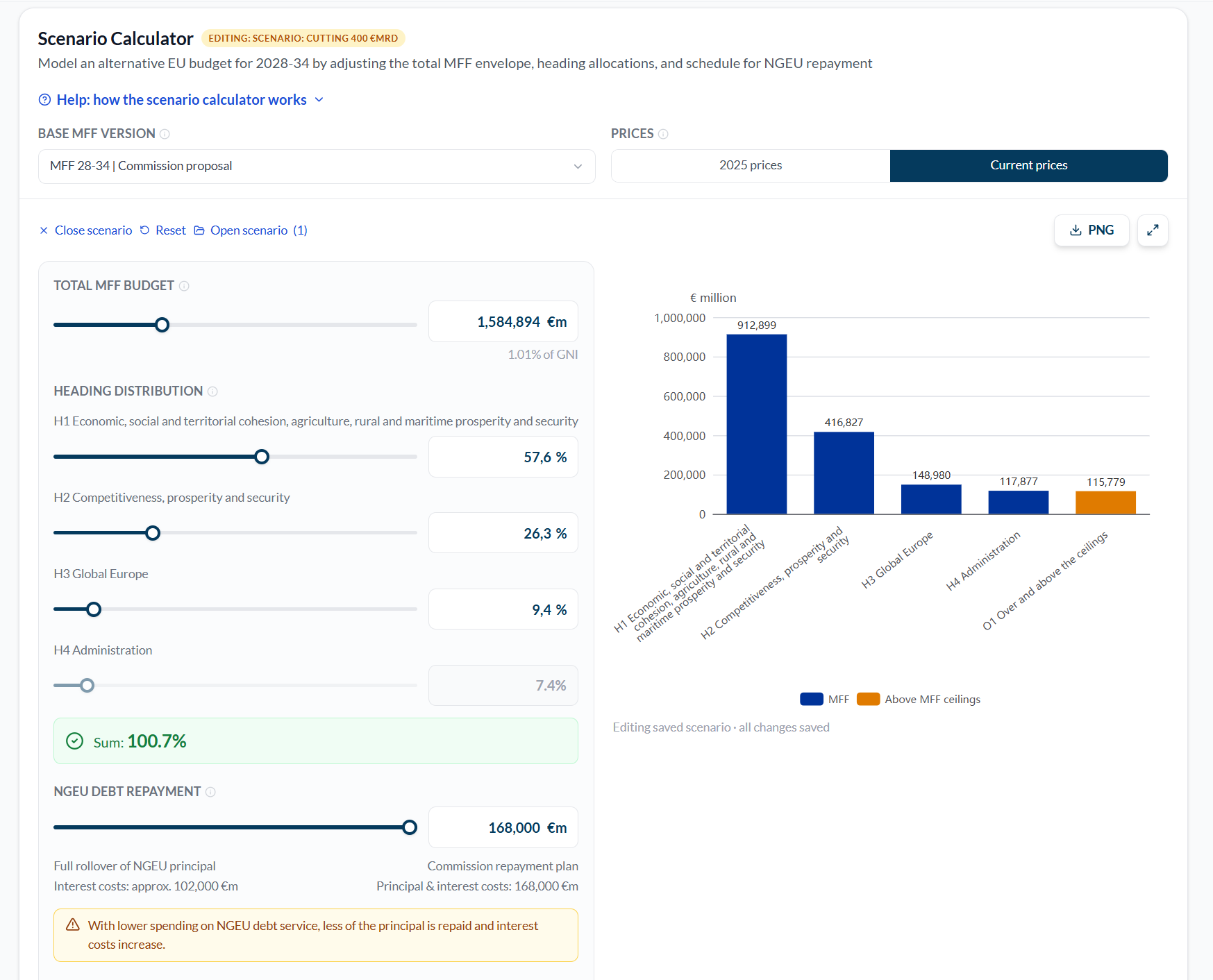

Grafik: Scenario Calculator

The stakes in the upcoming negotiations are high. EU leaders aim to reach a political agreement on the budget for 2028-2034 by the end of 2026. A political agreement is still a long way off as the positions of Member States differ significantly. At the end of August, Germany and five other Member States called for considerable cuts to the budget while highlighting the importance of new priorities especially competitiveness, defense and security. Other countries are pushing to protect established spending areas such as agriculture and cohesion. Balancing financing for the new objectives with demands to cut the overall budget is emerging as one of the central trade-offs in the upcoming negotiations.