Now in the fifth year of resisting Russia’s full-scale military aggression, Ukrainian and EU residents hold increasingly divergent perspectives on the accession process and protecting the EU from Russia. While citizens in Ukraine view their national resistance as defending the entire continent and the EU, as well, and want Ukraine to be granted EU membership soon, apprehension remains widespread across the Union. Addressing this growing disconnect will require deeper dialogue between policymakers and citizens as well as a renewed commitment to communicating the shared strategic goals of integrating Ukraine fully into the EU’s structures. Nearly one-third of EU respondents believe that the Union and its member states contribute more to protecting the Union than Ukraine does. One-fifth view the efforts as equal, and only 16% see Ukraine as the main defender, compared to 58% of Ukrainian respondents.
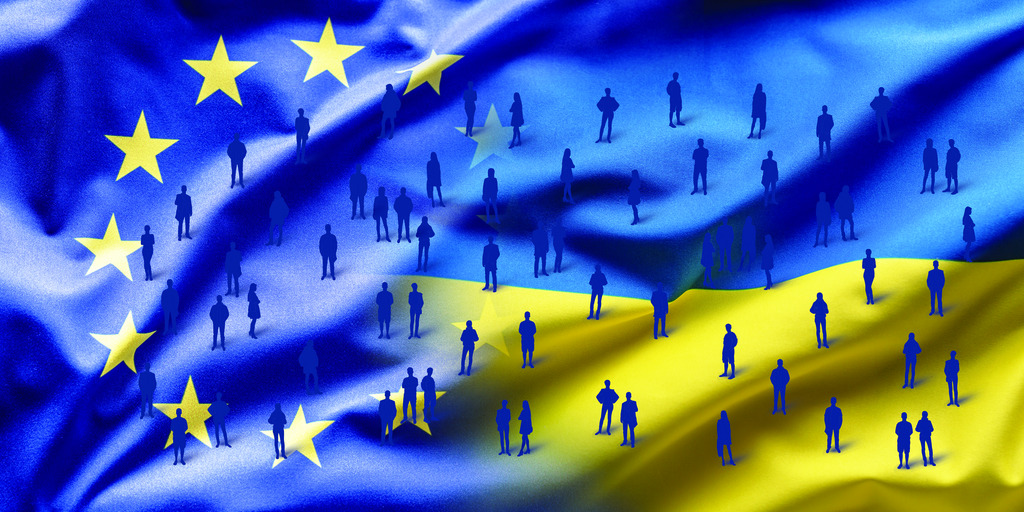
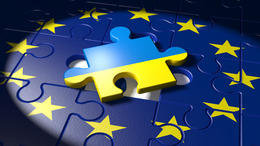
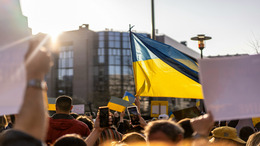
Montage: © stock.adobe.com/katty2016 © stock.adobe.com/weyo
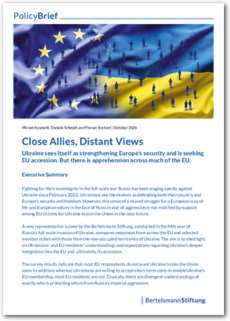
Close Allies, Distant Views: Declining Public Support for Ukraine’s Accession Signals Growing Challenge for EU Policy Makers
A new survey by the Bertelsmann Stiftung reveals a growing disconnect between public sentiment in EU member states and Ukraine’s ambition to join the Union. While a majority of Ukrainians want rapid accession and express readiness to shoulder short-term costs, 53% of EU citizens currently oppose granting Ukraine full membership soon. Moreover, views differ over who contributes more to the Union’s security and defence. Policymakers should clearly explain why investing in Ukraine is strategically valuable in the long term.

Content
Split Over Financial Burdens to Enable Ukraine to Become a Full EU Member
Public opinion is also divided when it comes to the short-term economic costs of adjustments required as part of the accession process. While two-thirds of Ukrainians state a readiness to accept higher costs, almost two-thirds of EU citizens reject taking on additional financial burdens.
Highlighting the need for transparent communication, Miriam Kosmehl, our expert on Eastern Europe, emphasises the broader implications for the EU: "Ukraine’s precarious financial situation poses a challenge to the EU as a whole, as stability in our large European neighbour is a matter of shared interest. The estimated financing needs for reconstruction alone now exceed €500 billion. Meeting them will require a comprehensive mix of mutually reinforcing instruments. It is essential now to keep the public on board."
These contrasting views of Ukrainian and EU respondents on actual defence efforts and financial burdens are likely to be difficult for many Ukrainians to comprehend, given their immense sacrifices in resisting Russia’s war of aggression.
Declining Support and Low Expectations of Benefits to the EU
Tracking public sentiment over time illustrates how willingness to support Ukraine has shifted since the start of the full-scale war in February 2022. The decline coincides with low public expectations regarding the tangible benefits of granting Ukraine EU membership. Asked about the primary advantage of accession:
Only 14% of EU citizens responded that Ukraine’s membership would make the Union stronger and more influential on the global stage, and
Just 11% of them said that they expect greater resilience in the Union.
"Ukraine’s defence of its sovereignty and democratic institutions has direct implications for the future of democracy and security in Europe," adds Miriam Kosmehl. "Russia seeks to exploit internal divisions to weaken EU consensus and solidarity. Open societies face particular challenges in addressing targeted influence operations. Responding to these challenges is a marathon, not a sprint."
Preserving European Unity
While EU member states demonstrated remarkable unity in the initial phase of the full-scale war, maintaining political consensus over time requires continued persuasion of people across the EU that investing in Ukraine benefits Europe as a whole, both now and as Ukraine moves towards EU membership. “At a time of growing competition for resources, policymakers should invest in strengthening European cohesion," says Malte Zabel, Director of our Europe program. "They should continue to make a compelling case to citizens across member states that firmly anchoring Ukraine within EU structures brings lasting benefits for Europe’s collective security, economic stability and shared democratic future."

Materials
- Graphic: Should Ukraine become a member of the EU in the coming years?
- Graphic: If Ukraine became a full member, what do you think would be the main benefit for the EU?
- Graphic: If Ukraine became a full member, what do you think would be the main challenge for the EU?
- Graphic: Who makes the greater contribution to protecting the EU from Russian aggression?
- Graphic: What are the most important factors for Ukraine’s EU membership to succeed?
Additional information:
eupinions is a European opinion research tool developed by the Bertelsmann Stiftung and conducted by Nira Data. eupinions regularly surveys citizens in all 27 EU member states on European issues. The survey for this analysis was conducted in June 2026 in the EU and in the government-controlled territories of Ukraine. Details of the survey methodology are included in the publication.