How Asia’s rise is changing the West and what it means for Germany

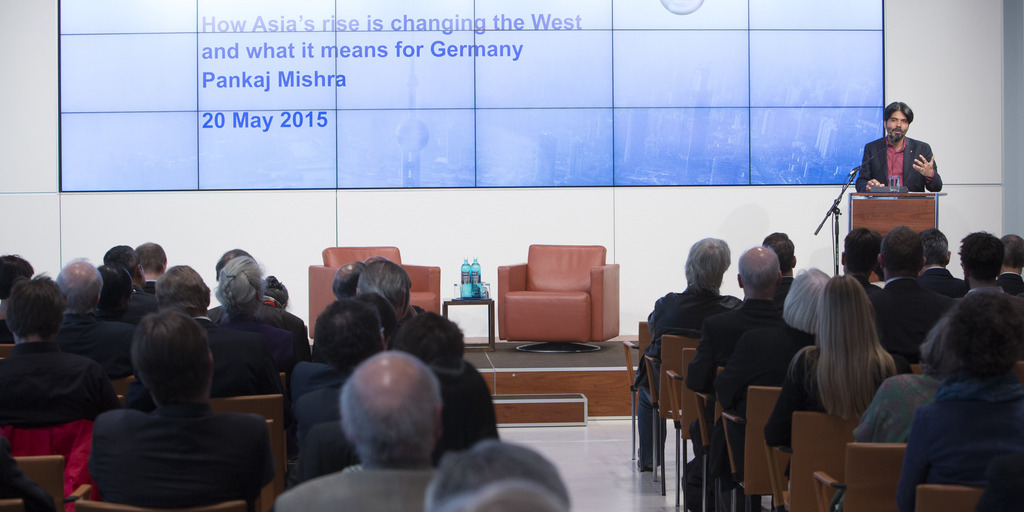
The rise of Asia and the ideas that lie behind it are shaping the 21st century. The hegemony of the West seems to be collapsing and with it Western norms and political ideals that many had taken for granted. These developments pose grave challenges, but they also offer opportunities to develop a new and more inclusive vantage point to look at world affairs, as the renowned author Pankaj Mishra pointed out in a public lecture organized by the Bertelsmann Stiftung on 20 May 2015 in Berlin.

[Translate to English:] Ansprechpartner

Pankaj Mishra spoke about “How Asia’s rise is changing the West and what it means for Germany“. He noted a gigantic geopolitical shift that has led to a new phase in the relations between the West and Asia. The question of how Asia’s rise is influencing the West is in itself a sign of a fundamental shift in thinking, as this question would not have been raised ten years ago.

He reminded his audience that both, the West and Asia, are ambiguous and contested terms which defy a simple definition. Germany, for example, did not consider itself a part of the West during the 19th and first half of the 20th century. Its political and cultural identity was built – at least in part – in opposition to the western values of enlightenment and the French revolution. The West was then largely confined to Britain, France and the US. Germany rejected unbridled market capitalism and rule by democratic majority and stood for superior values of an inward looking culture and a strong state. Only after 1945 did West Germany become a definite partner of the West. Since 1989, Eastern Europe also came under the umbrella of the West. Since 9/11, the wars in Iraq and Afghanistan and Guantanamo, there have been cracks in the alliance driven by ‘Western values’.
Play

Video

RANGE (Rethinking Assumptions in a New Geostrategic Environment) is a crowdsourced forecasting platform focused on geopolitics and the transatlantic relationship. We can’t predict the future, but we can get better at forecasting what lies ahead. To that end, the Bertelsmann Foundation, Bertelsmann Stiftung and Cultivate Labs created the RANGE Transatlantic Forecasting Platform. This unique tool draws on the wisdom of the crowd to paint a more accurate picture of the challenges and opportunities on the horizon.

In this tutorial video, we show you how to get started on RANGE, how to make a probabilistic forecast, and provide some tips to help you become an accurate forecaster.

Play

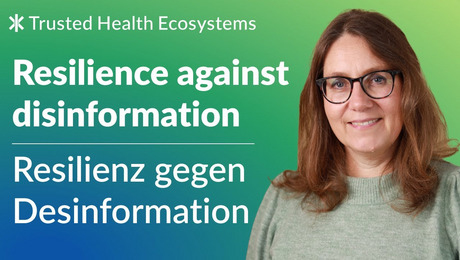
Those who want to inform themselves about health topics often feel lost in the jungle of information. According to surveys, many people do not have the necessary health literacy to distinguish fake news from trustworthy information. In this video, Dr. Kristine Sørensen, President of the International Health Literacy Association, explains why health literacy is important and how a national health platform can contribute to improving health literacy.

More information about our vision of a national health platform:
www.trusted-health-ecosystems.org/en

Play

Entrepreneurs change the way we think, work and live. Around the globe, inspiring young people are building successful companies around ideas that are driven by their ambitions and enabled by their entrepreneurial skills and values. Generation Z - referring to people born after 1997 - is reshaping our economies with its distinctive approaches to work and entrepreneurship.

The notions of the West and Asia are now being redefined. First and foremost among these notions, is the expectation that Asian countries have to follow a particular path of progress defined by the West’s own evolution in order to achieve prosperity and stability. According to Mishra, this traditional Western understanding of modernization does not fit the new reality of today’s Asia, which is characterized by a variety of unprecedented political forms and economic models challenging the Anglo-American world order.

The fraying of the Anglo-American world order has been accelerated by global capitalism as well. The notion that capitalism increases the size of the middle classes which would demand more political accountability thereby strengthening the democratic system has been put to question. The assumption that ‘Backward Asia’ would go along the lines which the West had been through to achieve a capitalism based liberal democracy is being shattered by the experience in many countries. Hence the confidence behind prescribing Western political and economic models to the rest of the world has come down and it will never regain its previous high.

Germany has had a different path of modernization compared to the rest of the West. A latecomer to the industrial revolution, it wanted to avoid the mistakes of the first movers who moved from agriculture to industry. The welfare state was thus formed to play a crucial role in the economy as well as to provide a safety net to its citizens. The American progressive movement owes its intellectual base to this strand of thought and more so the Japanese economic thinking. Indian intellectuals in the 19th century moved beyond the work of the English intelligentsia and studied the works of German thinkers as well.

What the German historical experience offers to contemporary Asia is a different model of economic and political consolidation than the one proposed by modernization theory. For at the heart of the German way towards modernity was the major role of the state in regulating economy and society. Germany should therefore reckon with its past to understand its position in the West and go beyond the Anglo centric world order to come to terms with a rising Asia.