How Asia’s rise is changing the West and what it means for Germany

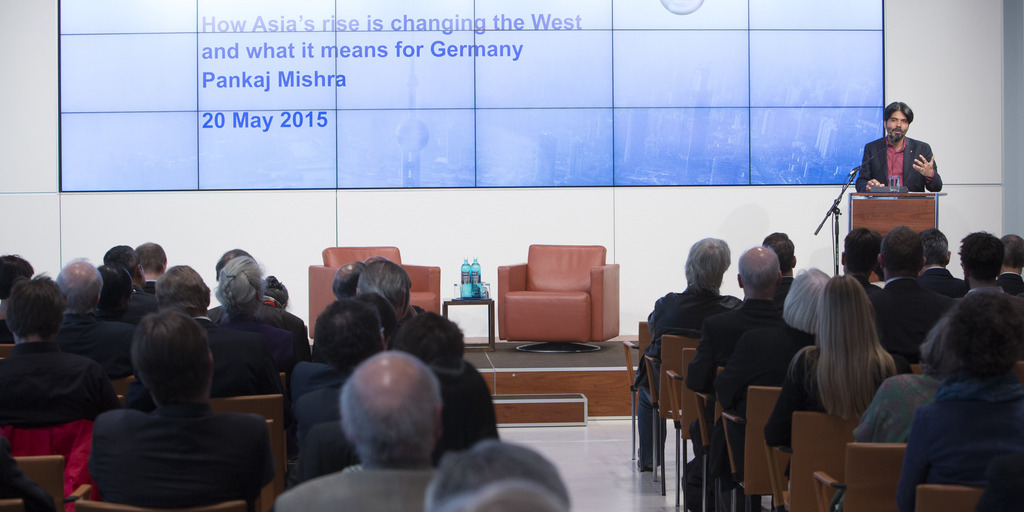
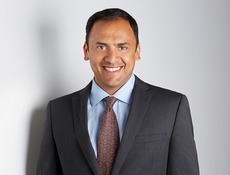
The rise of Asia and the ideas that lie behind it are shaping the 21st century. The hegemony of the West seems to be collapsing and with it Western norms and political ideals that many had taken for granted. These developments pose grave challenges, but they also offer opportunities to develop a new and more inclusive vantage point to look at world affairs, as the renowned author Pankaj Mishra pointed out in a public lecture organized by the Bertelsmann Stiftung on 20 May 2015 in Berlin.

[Translate to English:] Ansprechpartner

Pankaj Mishra spoke about “How Asia’s rise is changing the West and what it means for Germany“. He noted a gigantic geopolitical shift that has led to a new phase in the relations between the West and Asia. The question of how Asia’s rise is influencing the West is in itself a sign of a fundamental shift in thinking, as this question would not have been raised ten years ago.

He reminded his audience that both, the West and Asia, are ambiguous and contested terms which defy a simple definition. Germany, for example, did not consider itself a part of the West during the 19th and first half of the 20th century. Its political and cultural identity was built – at least in part – in opposition to the western values of enlightenment and the French revolution. The West was then largely confined to Britain, France and the US. Germany rejected unbridled market capitalism and rule by democratic majority and stood for superior values of an inward looking culture and a strong state. Only after 1945 did West Germany become a definite partner of the West. Since 1989, Eastern Europe also came under the umbrella of the West. Since 9/11, the wars in Iraq and Afghanistan and Guantanamo, there have been cracks in the alliance driven by ‘Western values’.
Play

In the “Trusted Health Ecosystems” project, we are committed to shaping the digital healthcare system of tomorrow in a way that is both “social” and fair. With that in mind, we are creating a vision of a national healthcare platform that promotes participation in healthcare and creates digital “trust spaces". This video is part of the overall concept which is published at www.trusted-health-ecosystems.org.

Play

In the “Trusted Health Ecosystems” project we are creating a concept and a product vision for a national health platform of the future. This video is part of the overall concept which is published at www.trusted-health-ecosystems.org. The core service of the platform provides personalized information pathways that adapt to changing information needs and have the capacity to facilitate the handling of health-related information. To illustrate our concept, we have developed a prototypical design that shows what this platform might look like one day.

Play

In an era where information is abundant and digital platforms offer nearly unrestricted access to knowledge, many people struggle to navigate the deluge of information. Coupled with the phenomenon of rapidly spreading disinformation on the internet, a dangerous combination is emerging, one that will pose significant challenges to healthcare systems in the future. In this video Alexander Sängerlaub (director and co-founder of futur eins) talks about the "brave new communication world".

Play

Platform economy presents opportunities and risks as globally operating tech companies enter the market with new healthcare platforms. National healthcare systems could position themselves in this space with their own offerings and public platforms. This would bring up a range of opportunities for public health.
The experts Dr. Matthias Naab and Dr. Marcus Trapp (Co-Founders of Full Flamingo, formerly at Fraunhofer IESE) present the advantages.

Play

The vision of a national health platform raises questions about the origin of the content and services offered there. A demand-driven offering requires a diverse range of information and services, which a single provider may struggle to fulfill alone. However, the platform operator does not have to create the content. The following considerations of Prof. Dr. Laura Schulte explore whether the platform operator should generate it's own information or focus on facilitating third-party information.

Play

A health ecosystem must fulfill several requirements if it is to bring value to stakeholders within a health system. International models have demonstrated that a successful operational model combines the active participation and coordination among involved actors with common technical standards. Dr. Tobias Silberzahn (McKinsey) presents best-practice-examples from abroad.

Play

Interview with Sangeet Paul Choudary (author, advisor, and founder of Platformation Labs). Network effects and economies of scale can lead to rapid growth, to the point that individual platform providers already have more data than traditional actors within the healthcare system. In parallel, closed systems and monopolies on data complicate the ability to switch providers and give rise to technological dependencies, which generate new powers. The video explains the role that public platforms could play in this regard.

Play

On the internet, people are increasingly encountering bots and convincingly realistic video manipulations that blur the boundaries between fiction and reality, further eroding trust in information. The echo chambers of social networks are already giving rise to isolated public spheres where false and misleading information can spread "virally" at high speed. In this video Alexander Sängerlaub (director and co-founder of futur eins) explains where disinformation actually originates and how healthcare systems could address this issue.

The notions of the West and Asia are now being redefined. First and foremost among these notions, is the expectation that Asian countries have to follow a particular path of progress defined by the West’s own evolution in order to achieve prosperity and stability. According to Mishra, this traditional Western understanding of modernization does not fit the new reality of today’s Asia, which is characterized by a variety of unprecedented political forms and economic models challenging the Anglo-American world order.

The fraying of the Anglo-American world order has been accelerated by global capitalism as well. The notion that capitalism increases the size of the middle classes which would demand more political accountability thereby strengthening the democratic system has been put to question. The assumption that ‘Backward Asia’ would go along the lines which the West had been through to achieve a capitalism based liberal democracy is being shattered by the experience in many countries. Hence the confidence behind prescribing Western political and economic models to the rest of the world has come down and it will never regain its previous high.

Germany has had a different path of modernization compared to the rest of the West. A latecomer to the industrial revolution, it wanted to avoid the mistakes of the first movers who moved from agriculture to industry. The welfare state was thus formed to play a crucial role in the economy as well as to provide a safety net to its citizens. The American progressive movement owes its intellectual base to this strand of thought and more so the Japanese economic thinking. Indian intellectuals in the 19th century moved beyond the work of the English intelligentsia and studied the works of German thinkers as well.

What the German historical experience offers to contemporary Asia is a different model of economic and political consolidation than the one proposed by modernization theory. For at the heart of the German way towards modernity was the major role of the state in regulating economy and society. Germany should therefore reckon with its past to understand its position in the West and go beyond the Anglo centric world order to come to terms with a rising Asia.