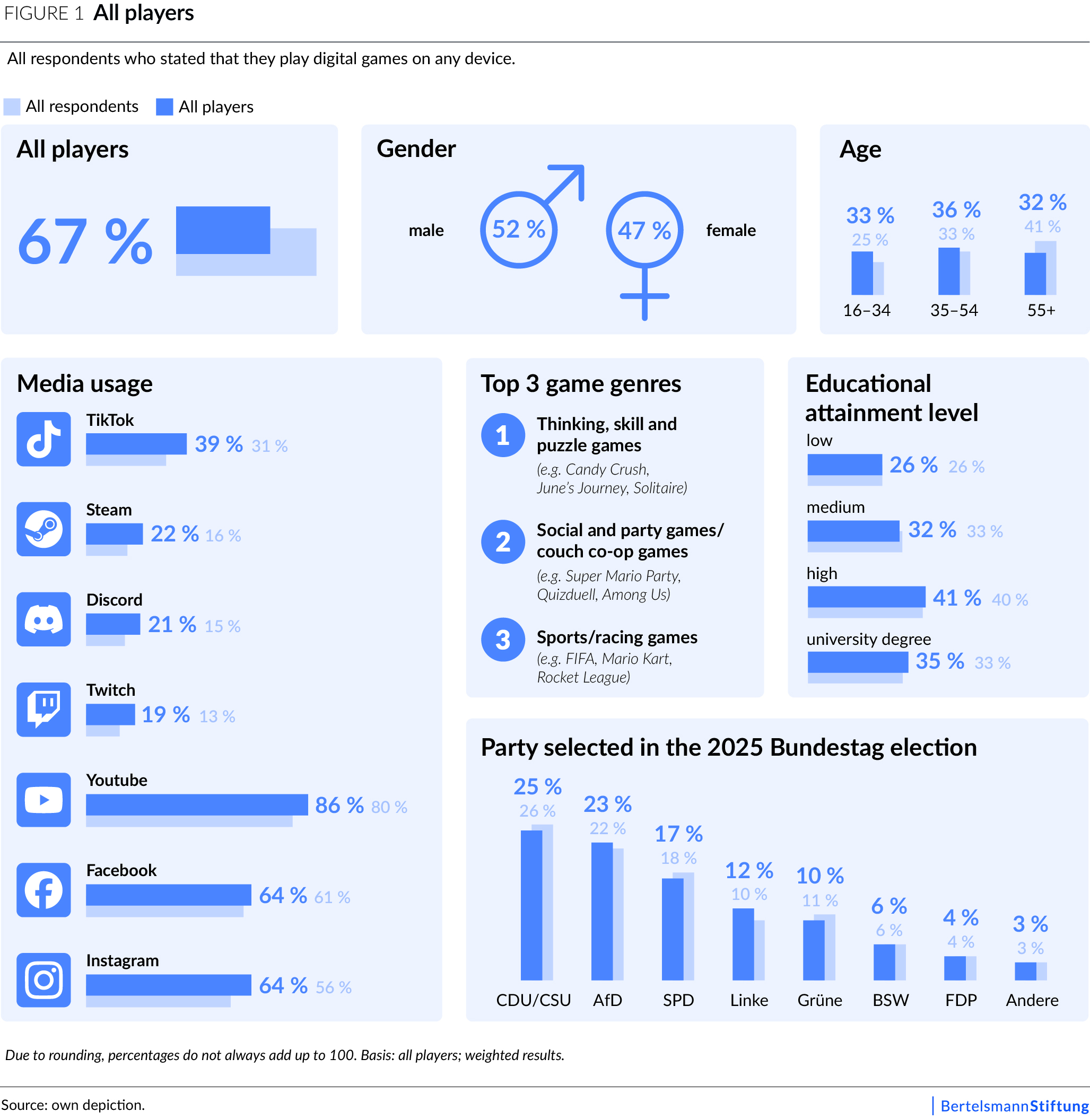
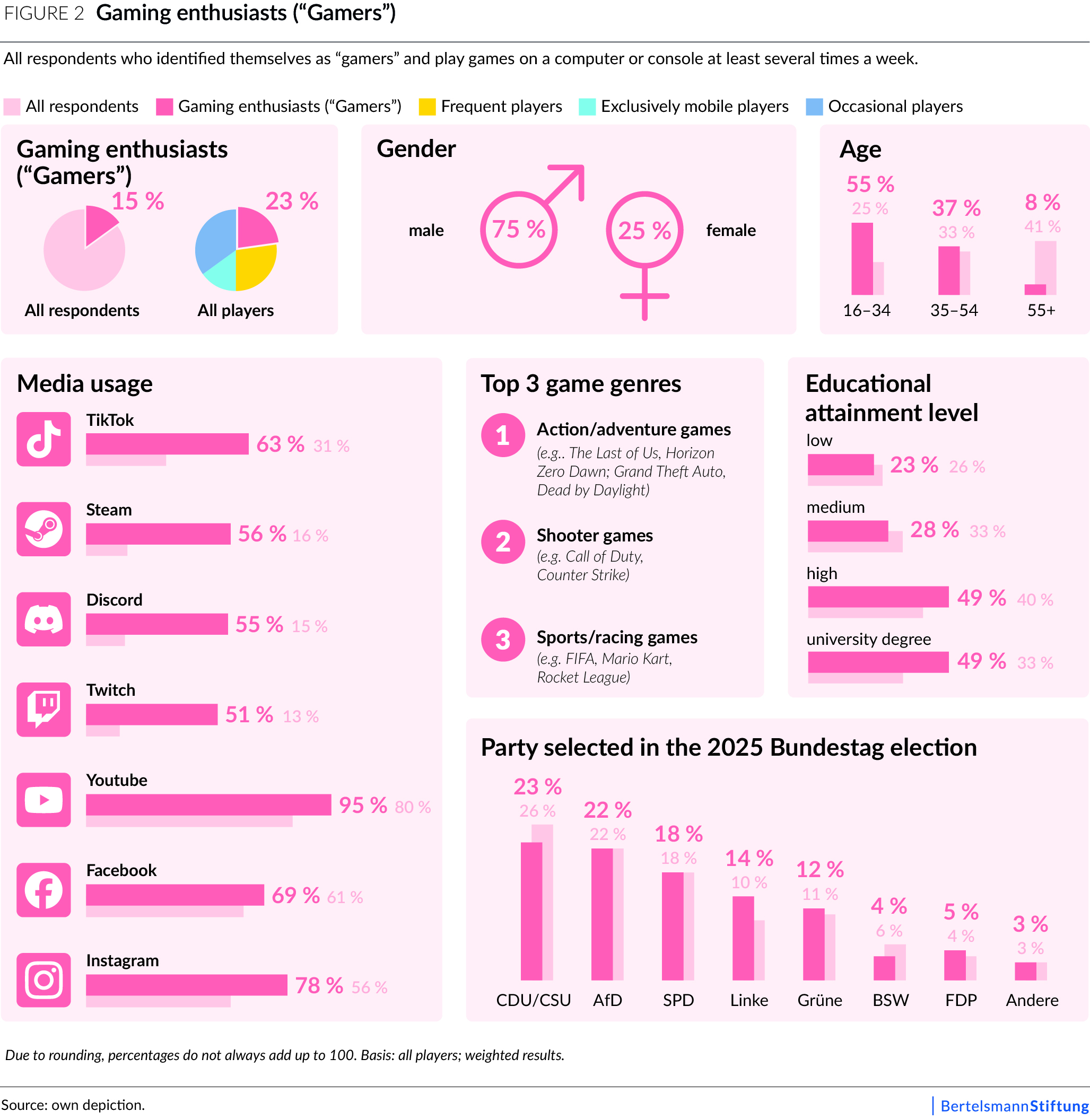
More than two-thirds of people in Germany aged 16 and over play digital games; in the 16–34 age group, the figure is as high as 86%, according to a new study by the Bertelsmann Stiftung. Beyond gaming, many people – especially younger ones – connect with each other on various digital platforms, such as Twitch, TikTok, YouTube and Discord. In such gaming communities, they discuss not only their gaming experiences, but also socio-political issues. From the United States, it is already known that these platforms are becoming the most important sources of political information for more and more young people. The Bertelsmann Stiftung has now conducted its first study of the political thinking and activities of the members of these communities in Germany.

© ekkaphan - stock.adobe.com
Better harnessing the democratic potential of gaming communities
In Germany, gaming is mostly seen as an economic factor or a form of entertainment. What is often neglected is how the players of digital games think and act politically – especially when they interact with each other in gaming communities, such as Twitch and Discord. In these digital spaces, high levels of socio-political engagement and trust in democracy coexist with a very diverse – but sometimes also problematic – culture of debate. It is important to finally understand gaming communities, take them seriously, and get their members politically involved.


Content
Bertelsmann Stiftung
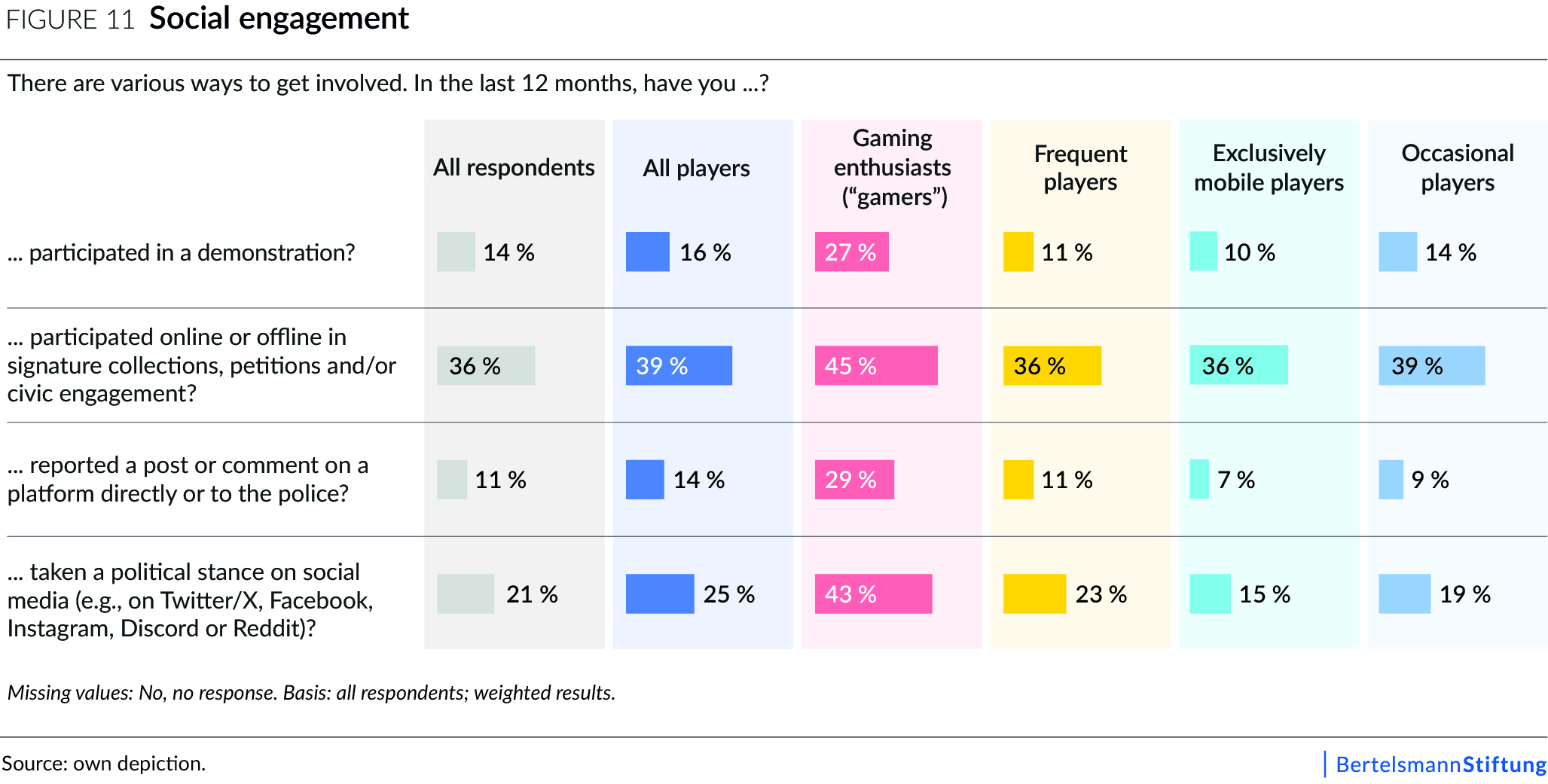
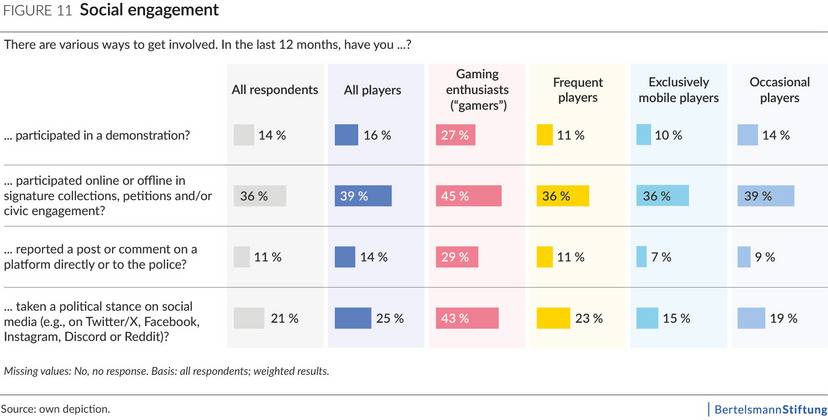
One finding of the study is that players of digital games show a willingness to engage in social and political issues at a level similar to that of the average of all respondents. It is noteworthy that those who play a lot and would describe themselves as “gamers” are more likely than average to participate in democratic processes. For example, 45 percent of this group of “gaming enthusiasts” say they actively participated in democratic processes (e.g., signing petitions or other forms of civic engagement) in the past 12 months. This means that they were more active than the population as a whole (39 percent) The gap is even wider when it comes to making political comments on social media channels (43 percent vs. 25 percent) and participating in demonstrations (27 percent to 14 percent).
"Gaming communities are anything but apolitical"
"Gaming communities are anything but apolitical," says Joachim Rother, an expert on gaming and democracy at the Bertelsmann Stiftung and co-author of the study . "For many young people, they are important channels for forming political opinions and help them learn the rules of democracy. However, to date, they have been taken too lightly or overlooked by politicians and the general public. It is time to harness the democratic potential of gaming communities."
Bertelsmann Stiftung
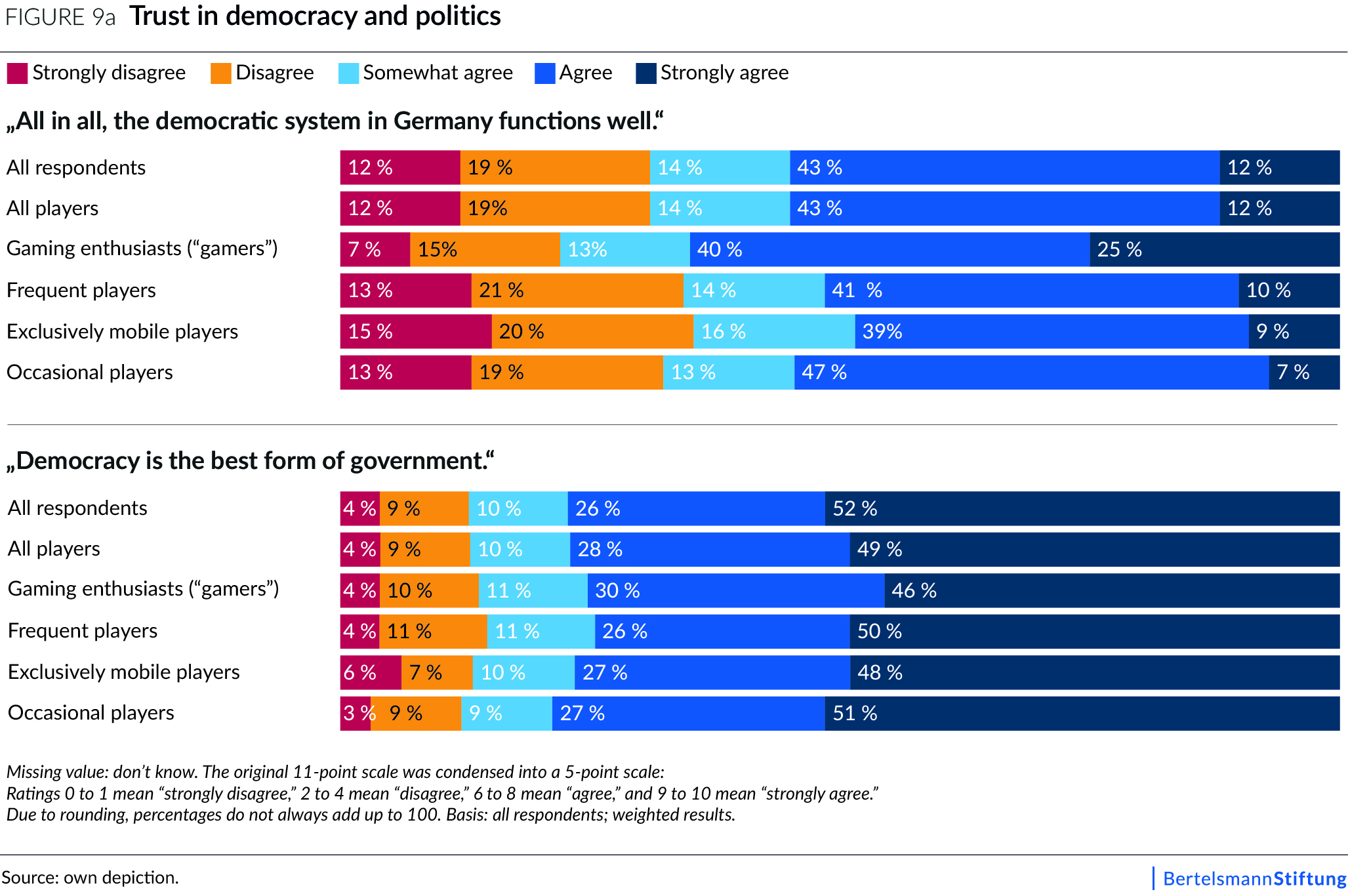
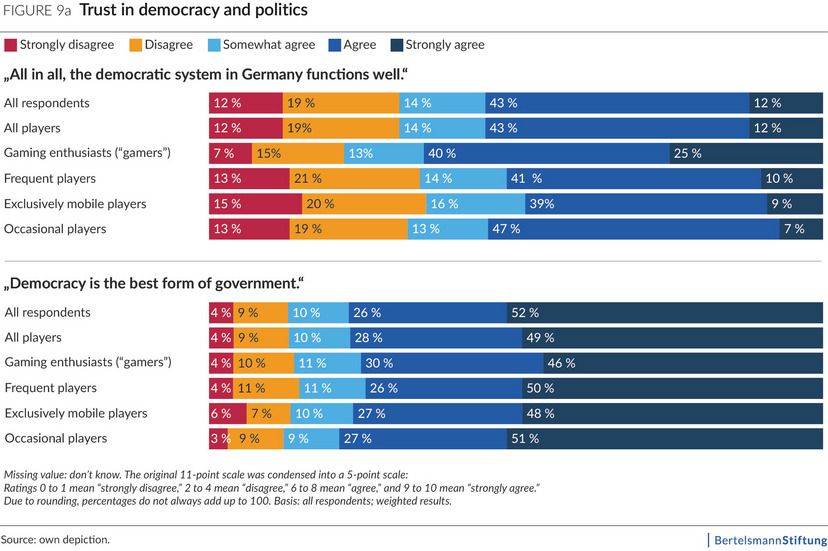
A similar picture emerges when it comes to trust in democracy. When asked whether they think the democratic system in Germany functions well, the rate of agreement among “gaming enthusiasts” was significantly higher than the average for all respondents (65 percent vs. 55 percent). They were also more likely to believe that Germany’s political system is capable of tackling tomorrow’s challenges (53 percent vs. 42 percent). In addition, half of them say they discuss political issues with other players. This is also very relevant for the future viability of democracy, as the group of “gaming enthusiasts” contains a large number of young people in relative terms.
As Rother emphasizes, gaming communities are not merely spaces for playing as a recreational activity, but rather social and cultural spaces in which many people form and nurture connections as well as experience a sense of belonging. For example, 43 percent of all men between the ages of 16 and 34 feel they belong to a gaming community. More than half of this age group (54 percent) say they have made friends through gaming, and many of them have already met up with people in the analog world who they first got to know through gaming. This means that gaming can foster social bonds, especially among young people, and serve as a bridge between the digital and analog worlds.
Confronting bullying, loneliness and anti-democratic attitudes
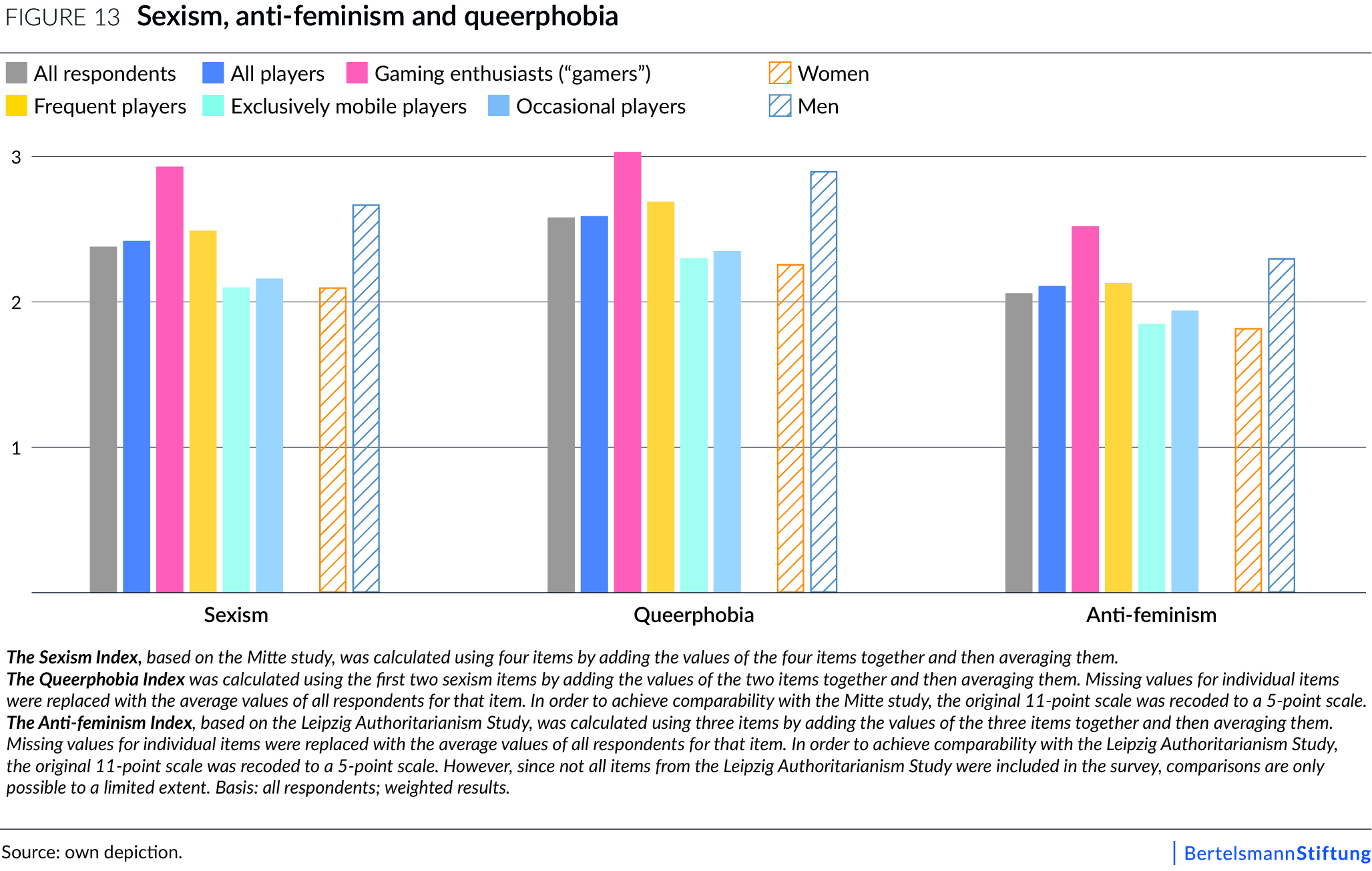
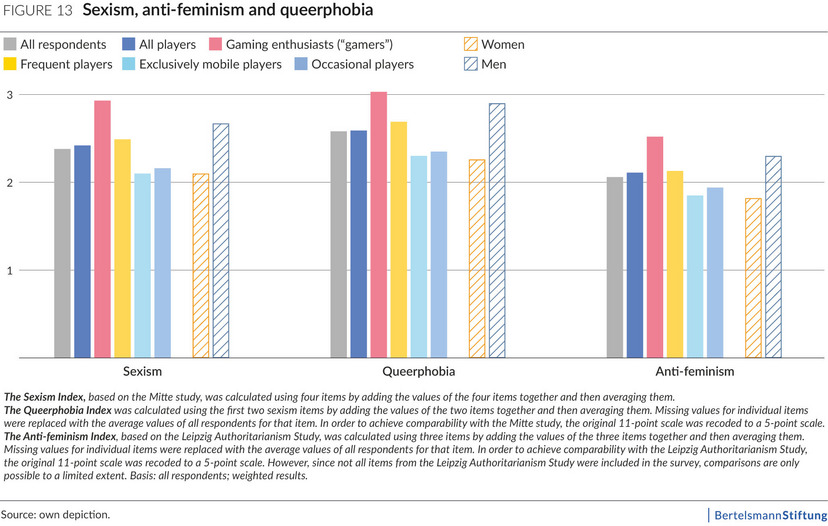
However, the study also highlights some problematic aspects. For example, it finds that the more players engage in social interaction online, the more frequently they report having been discriminated against or bullied. Another problematic finding is that 58 percent of the very young group of enthusiasts classify themselves as moderately or severely lonely. Last year, the Bertelsmann Stiftung demonstrated that young people are particularly affected by loneliness. It is also alarming that antisemitic, sexist and queerphobic attitudes are significantly more prevalent among “gaming enthusiasts” than among the average of all respondents. According to the Bertelsmann Stiftung, these mixed findings call for more research and comparisons with other online spaces.
Bertelsmann Stiftung
"Gaming communities reflect many of the problems facing society as a whole," says Jessika Gerke, an expert on youth at the Bertelsmann Stiftung and co-author of the study . "Misogynistic or homophobic attitudes are particularly common among young men, who make up three-quarters of ‘gaming enthusiasts.’ This is another reason why it is important to focus more attention on gaming communities. Doing so will increase the chances of helping young people affected by these issues and countering antidemocratic tendencies." Educational institutions, educators, youth welfare services and families are called upon to create safe spaces, encourage counterarguments and engage with young people on an equal footing about their digital lives. Civil society organizations and schools have an opportunity to create innovative and interesting offerings for young people by linking popular game titles with socially relevant topics and learning content.
To make the potential of gaming communities for democracy – but also the challenges they present to democracy – more visible, Gerke believes it is crucial "that they are finally recognized by policymakers and the public for what they are: key and identity-shaping experiential spaces for millions of young people.”"

Material
Additional Information
The study data was collected by pollytix strategic research gmbh on behalf of the Bertelsmann Stiftung’s "Democracy and Social Cohesion," "Education and the Next Generation," and “Digitalization and the Common Good” programs. The survey was conducted as a quota sampling via an online panel. A total of 6,435 internet users aged 16 and above were surveyed in the period from March 10 to 25, 2025. The group of “gaming enthusiasts” comprised 1,203 respondents.