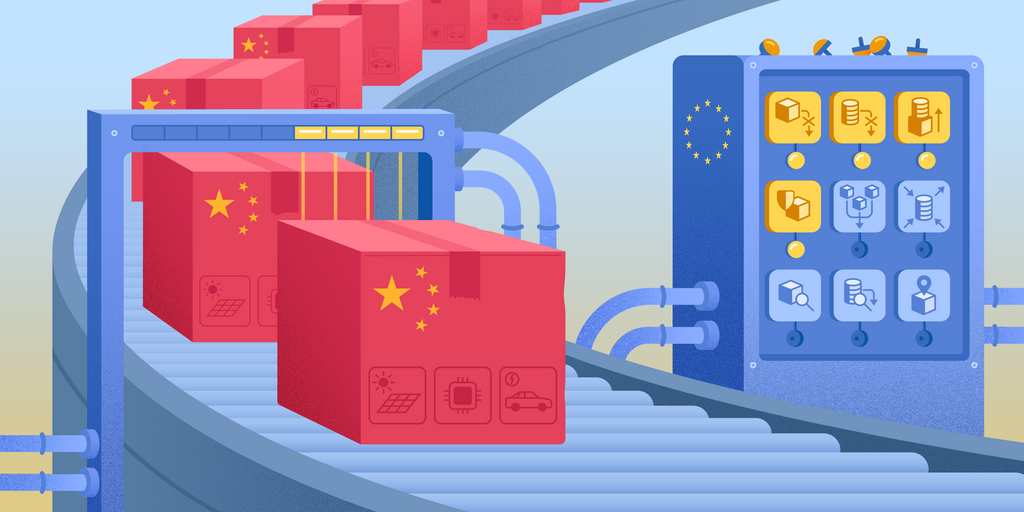
The EU needs to reshape its trade relationship with China. With European firms drastically losing market shares in China and Chinese sales of cars and machinery rising in the EU and on third markets, Europe’s and China’s economies are increasingly moving from complementary to competition.
Bertelsmann Stiftung
Your guide to Europe’s China shock trade debate: Assessing the EU’s available instruments
The EU’s trade relationship with China has become increasingly unsustainable. The EU now faces a strategic choice about how to respond. While some member states and industries have long benefited from inexpensive Chinese imports and access to China’s market, China’s industrial policy and macroeconomic model are now creating fierce competition in sectors central to European industry. Both action and inaction carry costs: trade defense measures could lead to Chinese retaliation, while inaction risks further erosion of Europe’s industrial base, with long-term consequences for the EU’s competitiveness, prosperity, innovation capability, and social and political stability.

Etienne
Höra
Content
Three main drivers of the current EU-China trade debate
This paper identifies three main drivers of the current EU-China trade debate:
- China’s economic model creates structural issues for the EU’s economy. Both its industrial policies and its macroeconomic situation, with massive investments in manufacturing and slow internal demand, create export pressure.
- Even those industries within the EU that used to benefit the most from business with China, especially German car and machinery manufacturing, are now rapidly losing ground. This may pave the way for tougher EU trade measures.
- Both action and inaction would come at a cost: If the EU imposes new tariffs, China may respond by weaponising critical dependencies. On the other hand, the social and economic cost of letting the EU’s industrial base erode further would be high.
Instruments
This paper examines what the EU’s existing trade instruments are designed to address, how they work, and where they reach their limits. It also discusses potential new instruments that the EU is debating on that could address gaps in its trade policy toolkit.
Recommendations
The EU should focus on three priorities:
- Using the existing toolkit and finetuning it instead of delaying action until new instruments are adopted
- Defining landing zones in negotiations with China
- Leveraging the trade measures as part of a holistic strategy for economic growth and competitiveness.
Providing an effective and coherent European answer to surging Chinese exports is crucial to unlock the Single Market’s growth potential and EU competitiveness.