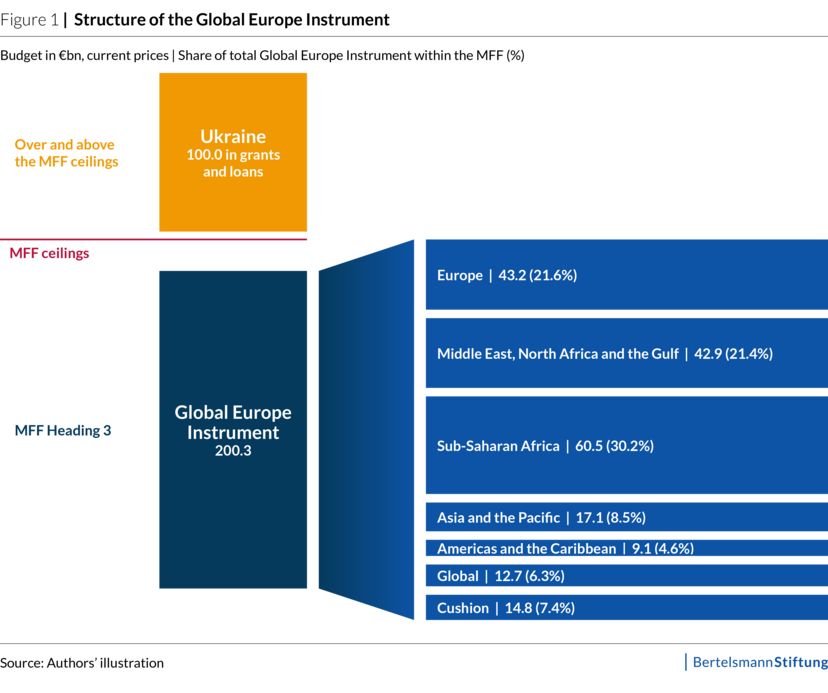

In July 2025, the European Commission kicked off the fight over the EU’s next long-term budget — and proposed an overhaul of EU external action funding through the Global Europe Instrument (GEI). At its core, the GEI is an attempt to refit EU external spending to a markedly tougher international environment. In the Commission’s words, the instrument should enable the Union to ‘meet the challenges of an increasingly difficult, fragile and volatile geopolitical context.’ Yet the proposal comes at a time when a tight EU budget and rising spending demands at home risk pushing external action to the margins of the broader budget debate.
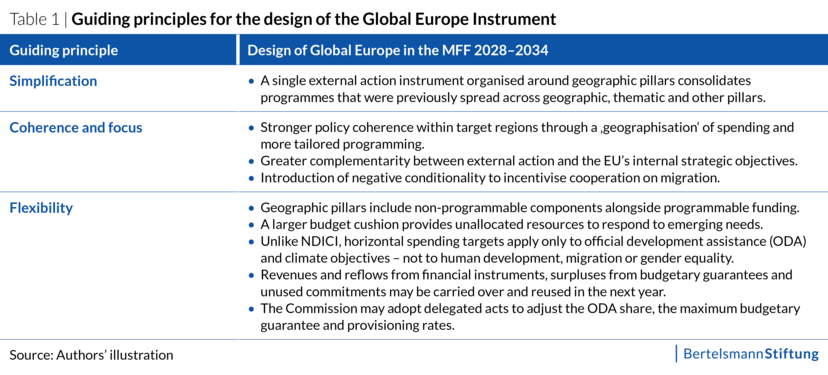
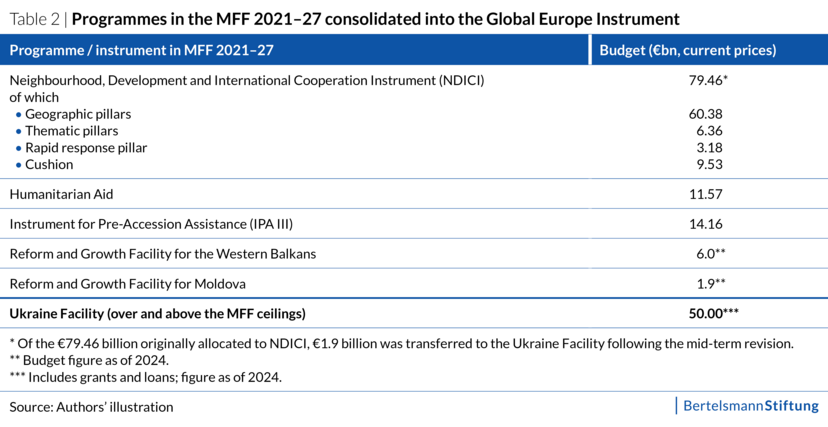
So what, exactly, is on the table? The instrument follows the design logic of the wider Multiannual Financial Framework (MFF): simplification, stronger coherence and focus, and greater flexibility. It consolidates external action funding into a single instrument, organises spending around geographic pillars that align more closely with internal priorities, and expands reserves to respond to emerging challenges. Key decisions would shift from fixed allocations agreed upfront to later programming stages. The result is not just a larger envelope, but a redesign that could change how the EU sets priorities abroad, how quickly it can redirect resources, and who ultimately gets to decide.
As negotiations unfold, four issues stand out in particular: the debate on a quota for official development assistance (ODA), the balance between programmable and non-programmable funding, the role of different EU institutions in shaping key decisions, and the robustness of reporting and evaluation.