Transformation Insights is the Newsletter of the Transformation Index BTI. We analyze Transformation Processes toward democracy and market economy in international comparison and identify successful strategies for peaceful change. BTI Transformation Index
|
|
|
|
|
|
2025 is coming to a close—a year defined by political uncertainty, economic stagnation and turbulence in governance.
While some promising leaders fell short of public expectations of political change, others crumbled under the pressure of a disintegrated geopolitical arena, characterized, in part, by the war in Ukraine, the conflict in the Middle East, US foreign and trade policy under Trump 2.0, Russian and Chinese expansion of influence as well as a general political polarization. It seems that leaders and publics alike often put their trust in a concentration of power under the facade of efficient decision-making instead of the robustness of democratic institutions. However, there are some dynamic political environments where a constitutional commitment is paired with institutional responsiveness to create reform-oriented agendas and pluralist participation.
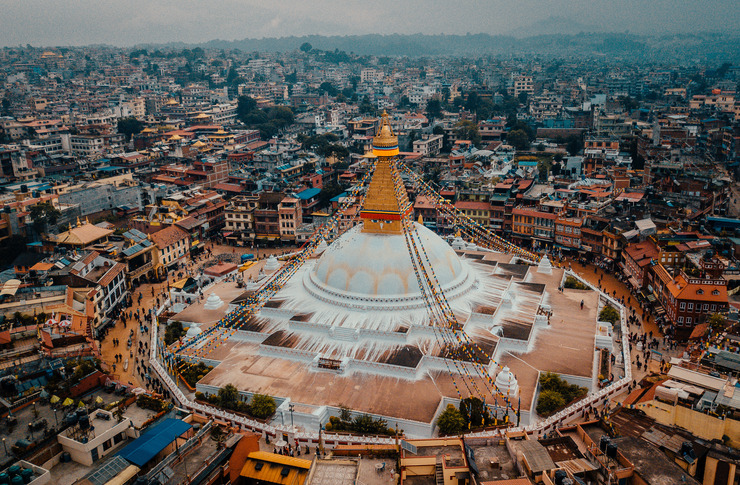
Economic austerity measures ignited by fiscal policies have lead to social unrest in many countries. While macro-economic indicators seem to stabilize in some regions of the world, structural problems in the socioecnomic sector remain, leading to economic stagnation. Nepal, Madagascar, Serbia, Kenya and Nigeria are only some examples of countries where social unrest was caused by political and economic uncertainty. Often, the protagonists of protests are young people who voice their dissatisfaction with political leadership, austerity measures, rising social inequality as well as the grim perspective for their own future. In some cases, these ‘Gen Z protests’ lead to actual political change. Our BTI Blog articles on Nepal and Serbia take a closer look at those.
Multiple crises make apparent the structural vulnerabilities of many countries. With authoritarian and anti-pluralist actors becoming more assertive on the international stage, the era of a dominant and uncontested Western narrative is over. Now, more than ever, effective, transparent, and inclusive governance will be critical in determining whether transformation succeeds or fails. Visit our website.
|
|
|
|
|
|
|
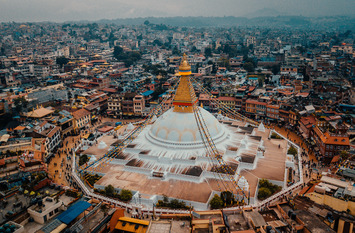
Nepal’s Gen-Z Uprising and the Fight to Rebuild a Broken Democracy
published December 2025
In Nepal, a youth revolt has toppled a prime minister, sparked digital resistance across the country, and ushered in the country’s first woman-led interim government. The country’s future, however, will be decided by the upcoming elections in March 2026 — and by whether a disorganized resistance movement can turn its street power into real political change. Read the article here.
|
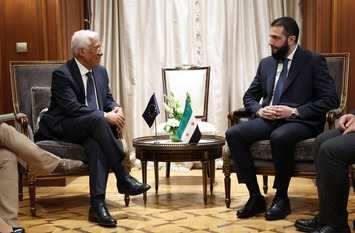
Syria’s First Parliament After Assad: Empty Seats and Empty Promises?
published December 2025
Syria’s first elections after the fall of Bashar al-Assad were meant to mark a new beginning. Instead, they produced a parliament without diversity or dissent. What emerges is not a body for the people, but a hollow chamber echoing the habits of the past. Can Syria rebuild its political life on such fragile ground? Read the article here.
|
|
|
|
|
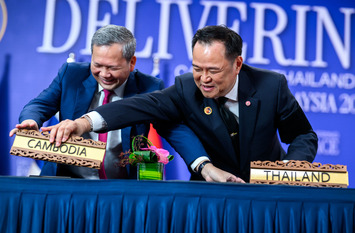
The Cambodia-Thailand Border Dispute Remains Unresolved
published in November 2025
On October 26, Cambodia and Thailand signed a “peace accord” on the sidelines of the 47th ASEAN Summit in Kuala Lumpur, formally pledging to de-escalate the situation along their shared border, after a military confrontation in July that left at least 42 people dead and displaced more than 300,000. Despite the “peace accord,” the dispute flared into conflict once more. Read the article here.
|
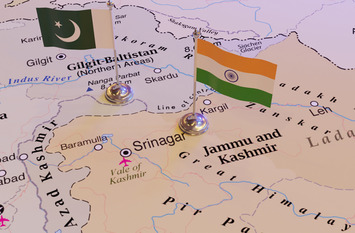
Escalation Without Evidence: The Dangerous Politics of Cross-Border Terrorism Accusations
published November 2025
In April 2025, militants killed 26 civilians in a terrorist attack near the town of Pahalgam in Jammu and Kashmir, delivering a serious blow to the Modi-led BJP government’s narrative that normalcy had returned to the region. India swiftly blamed Pakistan for the attack and launched airstrikes across the border, targeting what it described as “terrorist infrastructure.” The question is, what formed the basis for this claim? It is an urgent question given that subsequent Indian investigations into the Pahalgam attack have failed to uncover concrete evidence of Pakistani involvement. Read the article here.
|
|
|
|
|

Clouds on the Horizon for Milei, Argentina’s Libertarian Wonderkid
published October 2025
In December 2023, Argentina’s libertarian firebrand president Javier Milei took office with a chainsaw in hand and promises to slash the state. Today, inflation is down and the IMF is on board for his project—but poverty, protests and a corruption scandal are testing his pledge to break with the past. Read the article here.
|
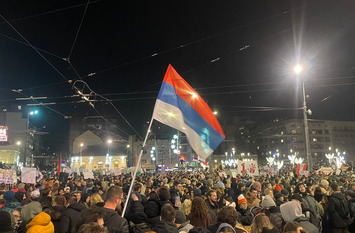
One man, One state: Vučić and Serbia’s Student Protests
published August 2025
A railway station tragedy has ignited Serbia’s largest student-led protests in decades, uniting a new generation against years of democratic backsliding. As President Aleksandar Vučić faces unprecedented electoral vulnerability, mutual distrust between students and opposition parties could determine whether the movement sparks lasting political change – or fades before its moment arrives. Read the article here.
|
|
|
|
|
|
|
|
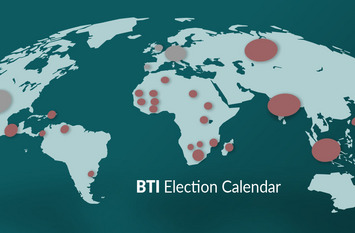
BTI Election Calendar 2025
After the successful initiation of our Election Calendar for the super election year 2024, we launched the new version this year. In the application, you will find election analyses with background information on the role of elections in individual BTI countries. The Election Calendar is dedicated to scrutinizing around 30 elections, underscoring our commitment to analyze transformation processes towards democracy. To access the Election Calendar 2025, click here.
|
|
|
|
|
|
|
|
BTI Advent Calendar on LinkedIn
The BTI Advent Calendar on LinkedIn is a reminder that this year also surfaced some reasons for optimism in world politics. This December, we showcase one bright spot every day, capturing positive transformation in a selective country. From pluralist elections and civil society involvement in decision-making to sustainable democratic transformation building the resilience of democratic institutions, the calendar shows many different examples which give cause for optimism around the holiday season. Find the calendar on our LinkedIn page via this link.
|
|
|
|
|
Happy Holidays! Next stop: BTI 2026
|
|
|
|
The BTI 2026 will be published in March 2026—containing the country reports and indicator scores for all 137 countries and regional reports on seven world regions as well as a Global Trend Report showcasing tendencies and directions of how countries and regions perform in the three BTI dimensions of politics, economy and governance over time.
The BTI Team wishes our regular readers, followers, and all enthusiasts of transformation processes a peaceful time around the holidays. BTI LinkedIn
|
|
|
|
|
|
|
|
|
|
|
|


