May 2025
Dear Readers,
Germany’s new government under Chancellor Friedrich Merz is just three weeks in – and already it is facing its first stress test. With Russia intensifying its attacks against Ukraine and Trump escalating tariff threats, there is no doubt: there is no grace period for Berlin. Chancellor Merz has vowed to bring strategic clarity to Germany’s EU policy. Now comes the first opportunity to deliver – because without a decisive Berlin, Europe will struggle to respond effectively to Washington’s increasingly coercive trade environment.
We take the gravity of the profound global shifts seriously and are strengthening our Europe programme to meet the scale of the challenge. Today, I would like to introduce Lucas Guttenberg as the new Director of BSt Europe. He leads the team together with Malte Zabel, Co-Director since 2021. Lucas brings a combination of think tank skills and government know-how: Before joining us at BSt, he advised Vice-Chancellor and Economy Minister Robert Habeck on industrial and European policy and previously served as Deputy Director of the Jacques Delors Centre in Berlin. He began his career as an economist at the European Central Bank.
As we are reshaping our Europe work to meet the challenges our continent is facing, we launched a new website: it is our one-stop shop for everything Europe at Bertelsmann Stiftung. From innovation and investment to China, tech and resilience, you will find our latest studies, policy briefs, commentaries, and events along with our experts. I invite you to explore the full scope of our work!
With this new Europe newsletter, Lucas Guttenberg and I will keep you informed biweekly about the most pressing and strategic issues we are working on.
This week, I would like to highlight our work on boosting Europe’s competitiveness with the limited financial resources at hand. My colleague Lucas Carvalho makes proposals how the planned European Competitiveness Fund in the next EU Multiannual Financial Framework could look like. He explains how bundling existing EU programmes into a single fund could unlock more impact and lays out the design principles that should guide it. Additionally, we examine how Germany can step up to lead Europe’s preparedness agenda by adopting a whole-of-society approach to national security – a shift that is long overdue given current threats. We also explore how the EU might navigate a looming trade war with the United States, including options for burden-sharing among Member States.
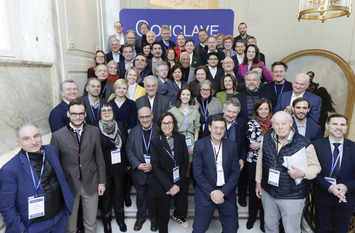
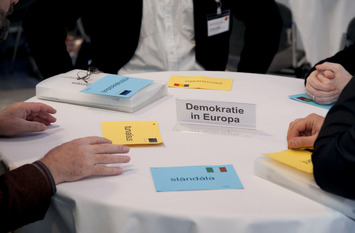
We are also excited to share the 2025 Conclave Report, the result of our second high-level meeting with leading European thinkers. The conclave delivered a clear message: Europe should aim to realise its full potential, becoming more proactive, more resilient and more effective. This transformation depends on unity, strategic investment and a citizen-driven vision for the future.
Scroll down to explore more of our recent and upcoming activities.
Please be in touch with your comments, suggestions and questions.
Best wishes,
Daniela Schwarzer
Member of the Executive Board