|
Dear Readers,
One year after the Niinistö report, Brussels’s much-discussed Preparedness Union is struggling to leap from the page into reality. At last week’s European Council, EU leaders urged member states to form capability coalitions in all priority areas by year’s end and to launch concrete projects in early 2026, aiming to reduce strategic dependencies and close capability gaps. In their new op-ed, Helena Quis and Goran Buldioski argue that the EU must clearly define its added value alongside NATO, align its tools with national realities, and build resilience from the ground up.
Also high on the Council’s agenda last week and particularly pushed forward by German Chancellor Friedrich Merz was competitiveness, which is increasingly being brought into conflict with climate goals, thereby worrying some that 2040 emissions reduction goals could be sacrificed for laxer industry regulations. But there is a way to support Europe’s car industry without wrangling over the internal combustion phase out, argue Lucas Guttenberg, Nils Redeker and Sander Tordoir in a new joint policy brief. By expanding France’s eco-bonus model, the EU can steer demand towards European EVs.
From automobiles to AI, Europe’s digital ambitions also took a step forward with last week’s memorandum of understanding between the European Commission and the European Investment Bank (EIB), in which the EIB will help the Commission evaluate projects to construct AI gigafactories. In a new policy brief, Felix Sieker and Julia Christina Hess argue that the current AI gigafactory strategy leans too heavily on supply-side measures and call for a broader, multi-client model that better matches market demand and innovation potential.
Political turbulence in Paris continues to shake confidence in Europe’s ability to move forward. On Deutsche Welle’s To the Point, Daniela Schwarzer discusses whether a possible surge of far-right support will destabilise France and, by extension, Europe. Precisely in such times, fostering spaces for Franco-German dialogue and collaboration is essential. This week, we were glad to host the Franco-German Dialogue on Technological Resilience and Sovereignty, an important step in preparing the European Digital Sovereignty Summit in Berlin on 18 November.
Best wishes,
Malte Zabel
Director, Europe’s Future Programme
|
|
|
|
|

Policy Brief | How Buy-European Rules Can Help Save Europe's Car Industry
Europe’s car industry faces a perfect storm: China’s export surge, new U.S. tariffs, and weak EU demand. Instead of rollbacks and bailouts, this paper by Lucas Guttenberg, Nils Redeker, and Sander Tordoir urges coordinated “buy-European” EV subsidies based on France’s eco-bonus to scale up Europe’s EV production, safeguard jobs, and boost competitiveness.
Read more
|
Op-Ed | One Year After Niinistö: Why the EU’s Preparedness Moment Cannot Be Wasted
One year after the Niinistö report, Brussels’ “Preparedness Union” risks mere box-ticking unless it can find a clear niche that complements NATO and supports member states. The piece by Helena Quis and Goran Buldioski urges the EU to map national realities, align tools with NATO goals, and strengthen societal resilience with practical, shareable solutions.
Read more
|
|
|
|
|
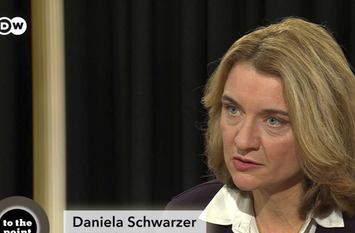
Video | Will France Destabilize the Whole Continent?
France’s political stability is crumbling. The future of the new government is uncertain, and both the Prime Minister and the President have bowed to opposition pressure, suspending Macron’s ambitious reform project. On DW's "To the Point", Daniela Schwarzer, Thibaut Madelin and Leonhard Horowski discuss how weakened Macron has become and what this means for Europe.
Watch here
|

Event | EU-India Strategic Dialogue
The EU–India Strategic Dialogue in Brussels, attended by Cora Jungbluth and Murali Nair, highlighted the growing geopolitical potential of this partnership. The dialogue focused on mutual trade, digital cooperation, and defence. There was a common call to strengthen resilient supply chains, conclude the FTA, and advance cross-regional initiatives to shape a stable global order.
Read more
|
|
|
|
|

Policy Brief | Built For Purpose? Demand-Led Scenarios for Europe’s AI Gigafactories
The EU’s plan to build five AI Gigafactories marks a shift from regulation to industrial strategy. A new policy brief by Felix Sieker and Julia Christina Hess argues the initiative focuses too much on supply and not enough on demand. To align more with the demand-side, they argue against the anchor-customer model and for a broader multi-client model.
Read more
|

Europe’s Role After USAID at the Aspen–GMF Bucharest Forum
At the Aspen–GMF Bucharest Summit, Brandon Bohrn reflected on the consequences of USAID’s closure for Europe’s engagement in the Western Balkans and Eastern Partnership. He emphasized that amid U.S. retrenchment, Europe faces a defining challenge to sustain democratic progress, governance reform, civil society support, and momentum toward EU enlargement in regions where adversarial powers are actively seeking to expand their influence. Find his recap on LinkedIn.
Read more
|
|
|
|
|
|
|
|
|
|
|
|
|
|


