Dear Readers,

Over the past two weeks, Donald Trump’s claim on Greenland and the tariff threats linked to it have dominated debates in Europe, from Davos to the special European Council meeting. While some of the most explicit threats have since been toned down, the episode remains a watershed moment. On Sunday, I discussed on Caren Miosga what the recent escalation has revealed about the EU’s capacity to act, and what the parallel pressure from Washington and Moscow now demands of Europe. 

Despite the US walk-back, the central challenge for Europe is to remain clear about what was at stake – and may well be again. As my colleague Brandon Bohrn argues in a recent interview, the fact that acquiring Greenland was put on the table at all has lasting consequences for the transatlantic relationship. It reflects a familiar Trump pattern: opening with maximalist, shock-inducing demands, followed by a tactical retreat and a negotiated outcome in which short-term US gains take precedence over the value of long-standing alliances. At the same time, the episode also showed that Europe can respond effectively when it acts with a united front and is prepared to use its leverage

The EU’s Anti-Coercion Instrument (ACI) provides a concrete framework for doing so. With the immediate tariff threat withdrawn, the European Council did not move toward activation, but the crisis nonetheless sharpened discussions about the conditions under which the ACI would need to be triggered. However, the risk remains that Europe continues to underestimate its own leverage, from market access and intellectual property to key technologies.

These external pressures coincide with demanding internal transformations. The expansion of carbon pricing to buildings and transport under ETS2 starting in 2028 illustrates how closely Europe’s strategic resilience is tied to social cohesion. As my colleagues Thomas Schwab and Sara Hagemann show, most households can absorb higher heating costs, but low-income and elderly homeowners face particular strain. Social Climate Plans can mitigate the impact, yet the challenge of shifting away from fossil fuels while maintaining public support remains.

As the Trump agenda floods European debates, Europe must ensure that other crises, above all the war against Ukraine, are not lost from view on either side of the Atlantic. Similarly, developments in Iran, amid the largest wave of nationwide protests since 2022, also continue to demand attention as my colleague Christian Hanelt discussed in a recent interview.

Best wishes, 

Daniela Schwarzer 

Member of the Executive Board

 
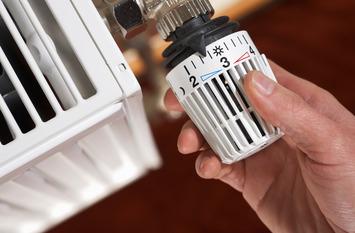
adjusting the radiator thermostat

Study | Heating up Inequality?

The EU’s ETS2, which comes into force in 2028, will price carbon for buildings and transport. A new study by Thomas Schwab and Sara Hagemann shows average heating costs rising by about €60 per household per year. Most can absorb this, but low-income and elderly homeowners face pressure. Social Climate Plans can help, yet the core challenge remains the shift away from fossil heating.
Read more

Daniela Schwarzer at Caren Miosga-Talkshow

Talk Show | How Can Europe Hold Its Ground?

On Caren Miosga, Daniela Schwarzer discussed with Norbert Röttgen and Sönke Neitzel how Europe is holding up under mounting pressure from Washington and Moscow. The debate covered the European response to Trump’s Greenland claims and what to expect from renewed Ukraine peace talks in Abu Dhabi. The panel also addressed the call by Canadian PM Carney for middle powers to unite. (In German)
Watch here

 
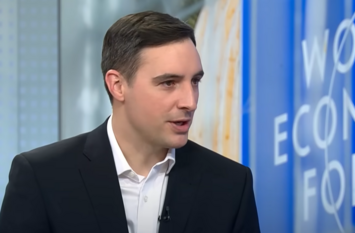
Brandon Bohrn

Interview | What Are the Political Costs of Trump's Greenland Ambitions?

US President Donald Trump says he got the deal that he wanted over Greenland after his speech in Davos. However, Brandon Bohrn argues in this interview with Deutsche Welle that the damage done to the transatlantic relationship around the US President’s territorial claims remain significant. Ultimately, the outcome revealed that that Europe can effectively stand up with a united front.
Watch here

Satellite

Analysis | It’s the Relative Size of the Space Economy, Stupid

Bold projections of a trillion-dollar space economy say little about real commercial maturity. This analysis by Torben Schütz argues that what matters is whether the sector can decouple from government demand. Without clear thresholds for self-sufficiency, hype risks premature policy shifts that could undermine innovation in critical space industries.
Read more

 
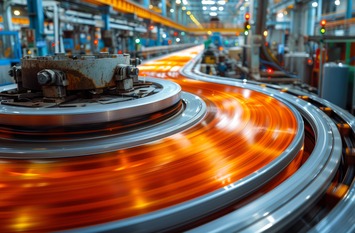
Production line

What the Leaked Industrial Accelerator Act Tells Us So Far

A leaked draft of the EU’s Industrial Accelerator Act reveals a shift from decarbonisation toward economic security and resilience. Lucas Resende Carvalho explains how the draft outlines four pillars: demand creation, security, permitting, and prioritisation. These are combined with strong “Made in Europe” rules, tougher procurement criteria, and strict FDI conditions.
Read more

Daniela Schwarzer

Op-Ed | Europe Must Push Back Against Trump’s Shock Tactics

Donald Trump’s territorial claims over Greenland and new tariff threats sent shockwaves through Europe. In her op-ed from Davos, Daniela Schwarzer argues that Europe must regain control of the debate, prepare the use of the EU’s Anti-Coercion Instrument, and deepen cooperation with other middle powers to defend core principles of the international order. (In German)
Read more


Stay tuned


Thank you for reading this edition of our BSt Europe newsletter!

Follow us on LinkedIn: linkedin.com/company/bst-europe

Follow us on Bluesky: bsky.app/profile/bst-europe.bsky.social