Dear Readers,
Europe’s economic model is under pressure, and at their retreat two weeks ago in the Belgian countryside, European leaders once again declared their willingness to act. They have promised to deliver tangible progress by summer this year, and we are happy to help.
This week, we have published two concrete proposals on how to improve Europe’s economic policy toolbox: Claudia-Dominique Geiser shows how to use the upcoming 28th Regime as a launchpad for deeper integration. She proposes setting up time-limited regulatory pilots to test harmonised rules for a small number of companies in policy areas where progress has long stalled, particularly in highly controversial areas, providing a testing ground for new rules.
Anna Heckhausen and Lucas Carvalho provide detailed recommendations on how to make the European Competitiveness Fund work as part of the new long-term EU budget – a cornerstone of the EU’s attempt to act much more flexibly in the next decade.
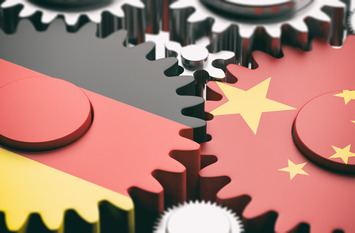
The economy is also on everyone’s mind as German Chancellor Merz visits China, with German companies likely among the hardest hit by Europe’s own China shock. But the economy is only one part of the equation: As Daniela Schwarzer and Cora Jungbluth show in their pieces, a coherent China policy means addressing both security and economic policy concerns at the same time. This also becomes apparent in the scenarios on what the world could look like in 2035 that we presented at our official side-event at the Munich Security Conference – and that you can read on our website.
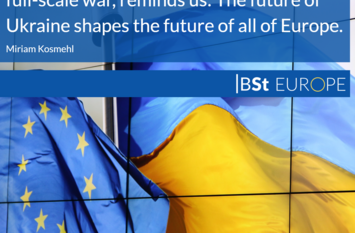
Finally, this week marks the fourth anniversary of Russia’s full-scale invasion of Ukraine. The war is a stark reminder that the threats to Europe’s security and prosperity are not abstract, but immediate and real. As Miriam Kosmehl explains, it also raises complex questions about how the EU should approach the possible accession of Ukraine.
Best regards from a finally sunny Berlin,
Lucas Guttenberg
Director, Europe’s Future Programme