>


Dear Readers,

Europe’s economic model is under pressure, and at their retreat two weeks ago in the Belgian countryside, European leaders once again declared their willingness to act. They have promised to deliver tangible progress by summer this year, and we are happy to help.

This week, we have published two concrete proposals on how to improve Europe’s economic policy toolboxClaudia-Dominique Geiser shows how to use the upcoming 28th Regime as a launchpad for deeper integration. She proposes setting up time-limited regulatory pilots to test harmonised rules for a small number of companies in policy areas where progress has long stalled, particularly in highly controversial areas, providing a testing ground for new rules. 

Anna Heckhausen and Lucas Carvalho provide detailed recommendations on how to make the European Competitiveness Fund work as part of the new long-term EU budget – a cornerstone of the EU’s attempt to act much more flexibly in the next decade.

The economy is also on everyone’s mind as German Chancellor Merz visits China, with German companies likely among the hardest hit by Europe’s own China shock. But the economy is only one part of the equation: As Daniela Schwarzer and Cora Jungbluth show in their pieces, a coherent China policy means addressing both security and economic policy concerns at the same time. This also becomes apparent in the scenarios on what the world could look like in 2035 that we presented at our official side-event at the Munich Security Conference – and that you can read on our website.

Finally, this week marks the fourth anniversary of Russia’s full-scale invasion of Ukraine. The war is a stark reminder that the threats to Europe’s security and prosperity are not abstract, but immediate and real. As Miriam Kosmehl explains, it also raises complex questions about how the EU should approach the possible accession of Ukraine.

Best regards from a finally sunny Berlin,

Lucas Guttenberg

Director, Europe’s Future Programme

 
Green plantations shot

Policy Brief I Incubating Integration in the 28th Regime with Regulatory Pilots

The European Commission is set to propose the "28th regime" - a single, opt-in rulebook to help startups scale across borders. But a narrow focus on company law leaves legal barriers to scaling untouched. In this new policy brief, Claudia-Dominique Geiser argues the Commission should leverage the current political momentum by combining a strong company law core with targeted, time-limited regulatory pilots in areas such as insolvency and labour mobility to test deeper harmonization.
Read more

individual squares - fragments

Policy Brief I Can the ECF Deliver Europe’s Industrial Strategy?

The European Competitiveness Fund has entered decisive MFF negotiations. In a new policy brief by Lucas Resende Carvalho and Anna Heckhausen, the authors examine how the proposed €234bn fund aims to replace today’s fragmented innovation funding landscape with a single, more strategic framework. As talks intensify, they outline what must be preserved – and refined – to ensure the ECF becomes a genuinely transformative instrument for Europe’s competitiveness.
Read more


Mrs. Daniela Schwarzer

Op-Ed I Realism and Strategy in Europe’s China Policy

With Chancellor Merz now in Beijing, the need for a clear-eyed European China strategy is evident. China is powerful, but not without constraints. The EU holds significant market and regulatory leverage if it acts collectively. In her latest Handelsblatt op-ed, Daniela Schwarzer argues that realism must acknowledge both rivalry and Europe’s own strength, while preserving scope for cooperation.
Read more

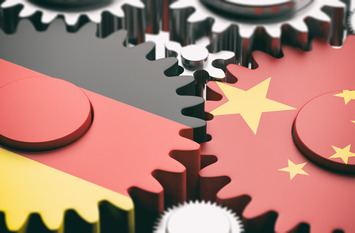
China and Germany flags on metal cogwheels.

Analysis I Navigating relations with China: Four Guardrails for Germany

As Chancellor Merz visits China at a pivotal moment, expectations run high. In a new analysis, Cora Jungbluth argues Berlin should align the trip with four guardrails: address Beijing’s stance on Russia’s war, push back against export restrictions, voice concerns about trade imbalances, and distinguish corporate interests from Europe’s broader economic security. Dialogue matters, but core interests must prevail.
Read more

 
six circles

Policy Brief | Six Scenarios for 2035 and How Europe Can Prepare for Them

The global order is fragmenting, and its ultimate trajectory remains uncertain. As introduced at the MSC, a new scenario-centred policy brief by Cora Jungbluth and Anika Laudien maps six plausible “world (dis)orders” ranging from Chinese or US hegemony to a brittle US–China duopoly, a five-power system, an authoritarian bloc, or a world shaped by non-state actors. The message for the EU is clear: act now, jointly and decisively, to prepare for a new global order.
Read more

EU and Ukraine flags

Analysis | 24 February 2026, marking four years of full-scale war

Ukraine’s EU accession has entered uncharted territory. In this post, Miriam Kosmehl examines whether fast-tracking membership could advance peace or undermine the EU’s conditional enlargement model. She argues that while political momentum is strong, a fixed accession date would carry legal and strategic risks. Instead, the EU should combine credible security guarantees with gradual market integration and sustained reform incentives.
Read more


Stay tuned


Thank you for reading this edition of our BSt Europe newsletter!

Follow us on LinkedIn: linkedin.com/company/bst-europe

Follow us on Bluesky: bsky.app/profile/bst-europe.bsky.social