|
Dear Readers,
While praised as a major success by President Trump, last week’s Trump-Xi summit in Beijing remained underwhelming on substance. Yet for Europe, the meeting once again underlined how strongly its future is shaped by the dynamics of the relationship between Washington and Beijing – a relationship whose trajectory remains deeply uncertain, ranging from the possibility of a transactional G2 logic to fear of escalating confrontation.
Questions such as these are central to a new policy brief by my colleagues Malte Zabel and Nathan Crist, who outline four scenarios for Europe in 2035 and examine how different geopolitical, economic and security trajectories could shape Europe’s future role in the world. On the U.S.-China-Europe dynamic, for example, one of their scenarios describes a Europe increasingly torn apart by strategic competition between the U.S. and China, while another outlines how the EU could emerge as an independent centre of power despite a difficult geopolitical environment.
Moving from 2035 back to the present, my colleague Cora Jungbluth argues in her latest piece that the China shock is no longer only an economic challenge for Europe, but increasingly a security policy risk as pressure on key industries also threatens the industrial base underpinning Europe’s long-term defence capabilities and supply chain resilience. She outlines three concrete steps Europe should take now to reduce these vulnerabilities, from stress-testing defence-relevant industries to coordinated trade defence measures and regular crisis simulations.
Against this backdrop of a more hostile global environment, the EU and the United Kingdom have over the past year worked to rebuild a more strategic relationship, culminating in a second EU-UK summit planned for this summer. However, Prime Minister Starmer is now coming under growing domestic pressure at a politically sensitive moment for this reset. In a new policy brief ahead of the summit, my colleague Jake Benford, Fabian Zuleeg, Jannike Wachowiak and I argue that leaders should use this moment not for a stock-take, but to strategically reset the relationship and agree a path forward. Regardless of whether the UK drops its red lines, the partnership should move towards more flexible cooperation in strategic areas where Europe’s scale, resilience and security depend on closer coordination between like-minded partners.
This matters all the more as doubts over the long-term U.S. security commitment to Europe continue to grow at a time when the continent needs to project strength. Notably, our latest eupinions data presented by Florian Kommer, Brandon Bohrn and Daniela Schmidt show that nearly three in four Europeans now believe the EU should “go its own way” after decades of close cooperation with the U.S. At the same time, Europeans remain deeply sceptical of China while continuing to support NATO and international cooperation. The picture that emerges is therefore not one of isolationism, but of a Europe that increasingly wants to strengthen its own capacity to act in a more confrontational world. That is something European policy makers can and should build on.
Best wishes,
Daniela Schwarzer
Member of the Executive Board
|
|
|
|
|
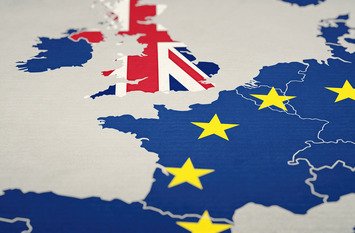
Policy Brief | From Post-Brexit Stabilisation to Strategic Partnership
The EU–UK relationship has stabilised since Brexit, but it still lacks a strategic core, write Jake Benford, Daniela Schwarzer, Fabian Zuleeg, and Jannike Wachowiak. They argue that as geopolitical pressures grow, both sides need to move beyond technical fixes and define shared priorities on security, resilience, technology and defence, including more flexible cooperation with like-minded partners beyond existing EU–UK formats today.
Read more
|

Policy Brief | Europe in 2035: Four Scenarios and the Choices that Matter
Europe’s future remains highly volatile. This policy brief by Nathan Crist and Malte Zabel outlines four scenarios for the European order up to 2035, from fragmentation and loss of agency to renewed strength. It shows how choices on competitiveness, decision-making, security and global partnerships before 2030 could determine whether Europe can shape its own future in a hostile world.
Read more
|
|
|
|
|

Policy Brief | Europe’s Call for Greater Independence
New eupinions survey data show growing support for a more independent EU that reduces strategic dependencies, strengthens its global role and remains committed to NATO and international cooperation worldwide. The findings show that European trust in the U.S. is declining sharply under the second Trump presidency, write Florian Kommer, Brandon Bohrn, and Daniela Schmidt, while skepticism toward China remains high.
Read more
|
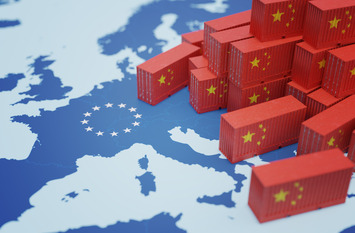
Op-Ed | Why the China Shock Is Also a Security Policy Risk
China’s state-backed industrial policy is increasing pressure on Europe’s key industries from automotive manufacturing to machine tools. This is not only an economic challenge, but a growing security risk, argues Cora Jungbluth. Europe’s defence capabilities depend on a strong industrial base, making supply-chain resilience and industrial policy central to long-term security.
Read more
|
|
|
|
|
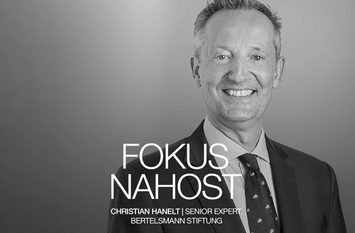
Interview | The EU in MENA – Acting without Unanimity
The EU has strategies, funding and diplomatic tools for the Middle East, yet internal divisions often prevent decisive action. In this episode of Fokus Nahost, Christian Hanelt discusses Europe’s role from Gaza to Iran and asks whether the EU can still act jointly in a region marked by war, instability and growing pressure on Europe.
Listen here
|
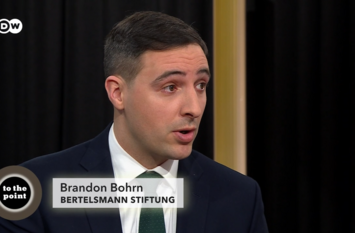
Talk Show | U.S. Troop Withdrawal: A Turning Point for Europe?
U.S. plans to withdraw troops from Germany and pause key weapons deployments are raising new doubts about Washington’s commitment to Europe’s security. As transatlantic tensions grow, this episode of To the Point with Brandon Bohrn, Gustav Gressel, and Rachel Tausendfreund explores what a weakened U.S. role could mean for NATO, Europe’s defence capabilities, and the future balance of global power.
Watch here
|
|
|
|
|
|
|
|
|
|
|
|
|
|


