|
Dear Readers,
European leaders this week convene in Copenhagen for an informal European Council meeting and the seventh meeting of the European Political Community. While the war in Ukraine shows daily what is at stake in Europe’s neighbourhood, Moldova’s parliamentary election last weekend offered yet another reminder: the people of Moldova again opted for a European course, handing a majority to pro-EU forces despite persistent Russian attempts at destabilisation and direct interference.
In this volatile context, our new Geoeconomic Interconnectivity Index (GEOII), launched last week, could not be more timely. It shows that the EU remains the most interconnected actor in its neighbourhood, but its position is increasingly contested. China, in particular, has caught up in key areas. Russia, though in relative decline, still wields leverage by weaponising energy and agri-food exports. To maintain sway, as my colleague Etienne Höra argues, the EU must bring the single market, regulatory power, and financial tools to bear so neighbours see real benefits in aligning with Europe rather than rival powers.
Europe’s ability to project such influence ultimately rests on its economic strength. The Commission has made simplification of EU law a central pillar of its competitiveness agenda, presenting six Omnibus packages within just a few months. Yet instead of providing clarity, many of the proposals risk weakening ambitious standards such as the Green Deal, while others are stuck in deadlock. In her new Policy Brief on the Omnibus agenda, my colleague Claudia-Dominique Geiser calls for a reset: simplification grounded in clear goals, evidence and early political alignment – so competitiveness is strengthened without sacrificing long-term priorities.
Meanwhile, hybrid pressure on the EU is mounting. Within a single month, Poland and Estonia have invoked NATO’s Article 4 after Russian drones and jets violated their airspace, while Denmark has also faced repeated incursions. Moscow has long tested NATO and the EU through hybrid tactics operating in the grey zone, but the scale and frequency now mark a new phase. EU leaders will use the informal European Council to weigh how to manage this escalation both in the short term and over the medium to long term, reinforcing deterrence, accelerating defence integration, and ensuring EU and NATO can respond jointly. However, security in this new era requires more than military readiness. As my colleague Helena Quis argued at the Aspen European Strategic Forum, defending trust, cohesion, and values is as vital as defending borders.
To readers in Germany, we wish you a happy Day of German Unity tomorrow!
Best wishes,
Daniela Schwarzer
Member of the Executive Board
|
|
|
|
|

Geoeconomic Interconnectivity Index
The new Geoeconomic Interconnectivity Index (GEOII), presented by Etienne Höra and Stefani Weiss in cooperation with ECIPE and wiiw, maps how the EU, China, Russia, and the US are embedded in Europe’s neighbourhood. Findings show the EU remains the most interconnected actor, but faces growing competition, highlighting the need for a more strategic use of Europe’s economic weight.
Read more
|

Policy Brief | Cutting Red Tape, Preserving Standards: Rethinking the EU's Omnibus Agenda
The Commission’s drive to simplify EU rules has not yet delivered on its promise of rapid and effective relief. Parts of the Omnibus agenda weaken standards and thereby miss the very purpose of simplification: reducing costs while preserving those high standards. An improved approach is needed with clear goals, sound design, and political consensus, argues Claudia-Dominique Geiser in a new policy brief.
Read more
|
|
|
|
|

Event | Lithium Rising Book Launch & Panel Discussion
The Bertelsmann Foundation in Washington, DC invites you to a special event in Berlin for the launch of Lithium Rising, the book expanding on the documentary of the same name about the global race for critical minerals. A panel with the author Samuel George and experts from industry and policy will discuss the strategic importance of raw materials.
Read more
|
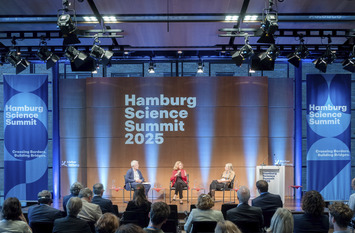
Podcast | How can Europe Hold its Ground Between the US, China, and Russia?
At the Hamburg Science Summit, Daniela Schwarzer discusses with Das Politikteil why Europe risks being squeezed between Washington, Moscow, and Beijing. She argues the EU must move from being a bystander to a shaper of global order, seizing chances for sovereignty amid shifting power balances. (In German)
Listen here
|
|
|
|
|

Societal Resilience at the Aspen European Strategic Summit
At the Aspen European Strategic Summit, Helena Quis stressed that defending values, trust, and cohesion is a vital part of national defence. Ukraine shows societal resilience is decisive in modern conflict, and yet across Europe, buy-in remains weak. Resilience must be built as a societal project, not just a military one. Find her recap on LinkedIn.
Read more
|
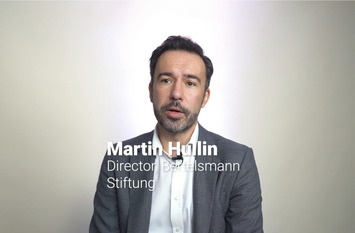
Interview | Let’s be Bullish About Europe
Europe has fallen behind in the tech race, risking “digital colony” status. In this interview with algorithmer.org, Martin Hullin explains ‘Eurostack’ and how it can build value-driven digital infrastructure aligned with European interests. The vision: regain sovereignty, reduce dependencies, and make Europe a leader in trusted innovation.
Watch here
|
|
|
|
|
|
|
|
|
|
|
|
|
|
|
|
|
|


