|
Dear Readers,
Last week marked ten years since the United Kingdom voted to leave the European Union. At the time, many feared Brexit would trigger a domino effect across the continent. A decade later, the opposite seems closer to the truth: the EU has held together, the appeal of leaving has faded, and the case for European cooperation has grown stronger.
Yet Brexit is far from settled history. As Jake Benford, Florian Kommer and Daniela Schmidt show in their new policy brief, early optimism in the UK has given way to widespread disillusionment. At the same time, British and EU citizens increasingly share common concerns, support closer cooperation, and favour a stronger European role in the world. Ten years on, the question is no longer whether Europe will fragment, but how Europeans – inside and outside the EU – can work together in a far more challenging geopolitical environment.
That question will also shape Britain's next political chapter. With Andy Burnham expected to succeed Keir Starmer as Prime Minister, he will inherit weak economic growth, pressure from Reform UK, difficult migration debates and hard security choices. As Jake Benford argues, one issue will cut across all of them: defining the UK's future relationship with the European Union.
Europe's ability to act, however, will also depend on strengthening its own capabilities. At VivaTech, Martin Hullin joined a debate on whether Europe can achieve AI sovereignty, highlighting how Europe can combine talent, regulation, markets and investment to build a trusted AI ecosystem. And as the EU prepares for a tougher trade policy towards China, Etienne Höra argues that tariffs and export restrictions should be complemented by a solidarity mechanism to help member states withstand economic retaliation and maintain a united front.
Underlying all these debates is one fundamental question: how should the EU spend its money? With negotiations on the next seven-year budget gathering pace, Anna Heckhausen explains in an interview for the European Economic and Social Committee why difficult choices over spending priorities, revenues and conditionality can no longer be postponed. The next Multiannual Financial Framework will shape the Union's ability to respond to the challenges of the coming decade.
Best wishes,
Malte Zabel
Director, Europe’s Future Programme
|
|
|
|
|
|
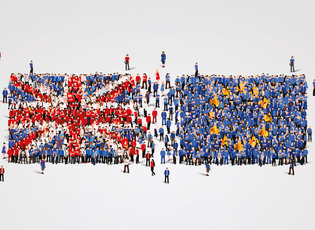
Ten years after Brexit, new data show the feared domino effect never materialised, write Jake Benford, Florian Kommer and Daniela Schmidt. While optimism in the UK has given way to disillusionment, British and EU citizens increasingly share common concerns and a preference for European cooperation.
|
|
|
|
|
|
|
|
|
|
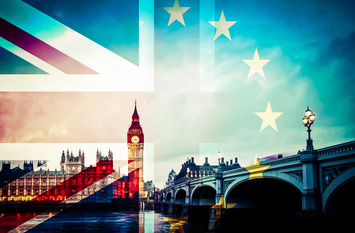
Analysis | EU-UK Relations after Starmer: New Management, Old Strategic Bind
With Andy Burnham’s expected move to Downing Street after a transfer of power from Keir Starmer’s premiership, he will inherit a demanding agenda, writes Jake Benford. Weak growth, pressure from Reform UK, migration debates, and difficult security choices—just to name a few. And of course, a decade after Brexit, the UK’s relationship with the EU remains one of the central unresolved questions for Britain’s leaders.
Read more
|
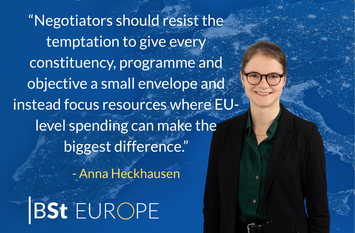
Interview | The Trade-Offs within the Next EU Budget
The debate around EU’s next seven-year budget is heating up. In an interview for the European Economic
and Social Committee newsletter, Anna Heckhausen explains the key trade-offs over budget size, priorities, structure, revenues and conditionality, and why negotiators must make clear choices about where EU spending can make the biggest difference.
Read more
|
|
|
|
|
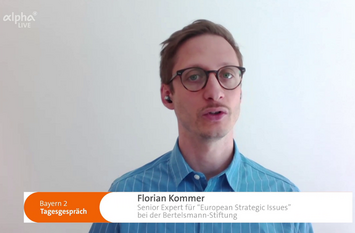
Interview | European Public Opinion on Brexit Ten Years On
Ten years after the Brexit referendum, the UK and the EU remain closely connected despite their separation. ARD’s Tagesgespräch dialled in Florian Kommer from Berlin so he could offer new eupinions data to ground the discussion on Brexit’s lasting political and economic consequences.
Watch here (from minute 20:30)
|
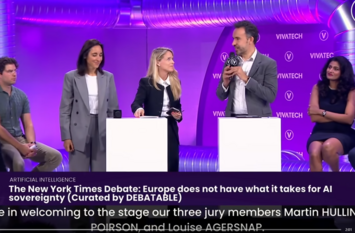
Event | Can Europe Achieve AI Sovereignty?
At VivaTech, Martin Hullin served as one of three judges for a formal debate exploring Europe’s strengths and weaknesses in the global AI race. The discussion moved beyond simple yes-or-no answers, highlighting how Europe can combine talent, regulation, markets, and public investment to build a trusted and distinctive AI ecosystem.
Watch here
|
|
|
|
|
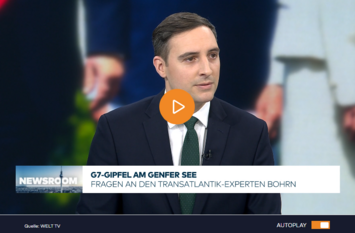
Interview | Positive Signs for the Transatlantic Relationship at the G7 Summit
In an interview with Welt, Brandon Bohrn analysed German Chancellor Friedrich Merz’s and US President Donald Trump's remarks at the G7 summit in Évian. Filmed in front of a photo from the summit in which a somewhat isolated Trump gives a thumbs up, Brandon breaks down the signs of renewed transatlantic alignment on foreign policy, with the agreement to end the U.S. and Israel’s conflict with Iran providing an important opportunity for closer coordination between Europe and the United States.
Watch here
|
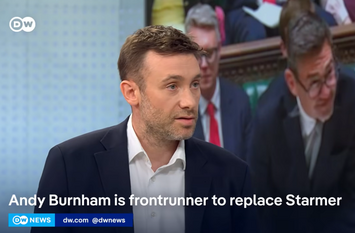
Interview | Andy Burnham Inherits Britain’s Brexit Challenges
On Deutsche Welle, Jake Benford discussed the reasons behind Keir Starmer’s downfall, including his failure to articulate a clear vision for the UK, and Labour’s struggle with its own red lines, such as its continued hesitancy to meaningfully deepen relations with the EU. The interview also looked ahead to what the future may hold for the UK and what the apparent new prime minister Andy Burnham will have to navigate should he indeed move into Downing Street.
Watch here
|
|
|
|
|

Video | Our Scenarios for Europe in 2035 Explained
This short explainer video – with a German version by Malte Zabel and an English version by Nathan Crist – presents the four scenarios from our latest policy brief on Europe’s future in 2035. The videos show how decisions made in the second half of the 2020s could determine whether Europe becomes more resilient and influential, or loses strategic agency in an increasingly contested world.
Watch here
|

Analysis | How to Survive a Trade War
As the EU considers ways to achieve a tougher trade stance on China, the European Commission is considering a solidarity mechanism to compensate those affected by retaliation from Beijing. Last year, Etienne Höra, Arthur Leichthammer and Aslak Berg argued for such a measure, explaining how it could help prevent internal divisions and strengthen the EU’s ability to sustain economic pressure.
Read more
|
|
|
|
|
|
|
|
|
|
|
|
|
|




