Dear Readers,
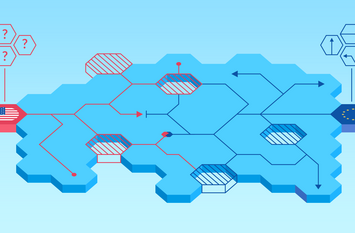
Last week's Anthropic decision by US President Donald Trump and this week's G7 summit in Évian are two examples of volatile US policy which remind Europeans that they need to strengthen their sovereignty while keeping transatlantic cooperation alive where interests align. Six months after the publication of the Trump administration’s National Security Strategy and its National Defense Strategy, my colleagues Brandon Bohrn and Peter Walkenhorst assess what an unpredictable and more fragmented US policy landscape means for Europe. They point out how urgently European governments need to strengthen strategic resilience, define common red lines and engage more broadly across the American political system while preserving cooperation where interests continue to align.
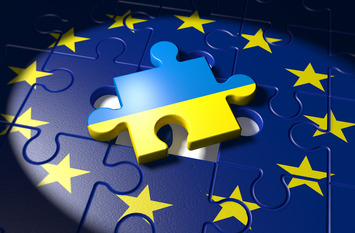
Ukraine’s future as part of a new European security order is one of the key challenges Europeans need to tackle. While Ukraine’s EU accession is increasingly seen as a geopolitical necessity, it raises profound institutional questions. Against the backdrop of recent proposals for interim or associate forms of integration – including ideas put forward by Chancellor Friedrich Merz and the ongoing debate in Brussels on how to combine accelerated integration with a merit-based accession process – Miriam Kosmehl and Christoph Michailow propose a pathway that bridges this gap. Their concept of political membership would deepen integration in areas such as security and reconstruction while supporting continued reforms on the road to full accession.
Europe’s ambitions, however, must be matched by resources. As negotiations on the next seven-year EU budget are under way, Anna Heckhausen highlights the emerging fault lines among member states. More than a budget debate, this is a question of whether Europe can equip itself for the challenges ahead.
Over the past years, I have shared this bi-weekly newsletter on our activities with the two Europe Directors at BSt, Lucas Guttenberg and Malte Zabel. This is my last newsletter editorial as I will be leaving the Bertelsmann Stiftung at the end of this month for a new endeavor in Berlin. It has been an honor to work with such a dedicated team at the Stiftung and with partners across the EU. I remain deeply convinced that Europe can and must stand its ground while being challenged from within and from the outside. Europeans can and should act with greater confidence, creativity and dedication. Europe needs to shape its own future now to become a stronger, democratic power in the world.
I would like to thank you for your interest in BSt Europe's work, your trust, and the inspiring exchanges I have had with many of you. While I will continue to support a stronger Europe through research, policy work and contributions to the public debate from my new position, Malte and Lucas will continue to share the program’s research, analysis and perspectives with you in this newsletter. Let's all continue to give our best for a strong, sovereign, competitive and democratic Europe!
Best wishes,
Daniela Schwarzer
Member of the Executive Board