Dear Readers,
Earlier this week, leaders of the Coalition of the Willing met in Paris to coordinate further support and security guarantees for Ukraine. Their meeting came only days after NATO leaders gathered in Ankara, reaffirming long-term support for Ukraine while explicitly recognising that European allies and Canada must assume greater responsibility for the Alliance’s defence. Together, the two meetings underline a demanding reality: Europe must substantially strengthen its capacity to act in foreign and security policy.
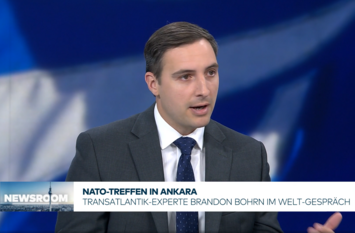
This is also the central conclusion of Brandon Bohrn’s assessment of the Ankara summit. While NATO demonstrated cohesion and renewed its support for Ukraine, the Trump administration’s long-term strategic focus is shifting away from Europe. Greater European responsibility for security is therefore no longer a distant aspiration, but an increasingly urgent necessity.
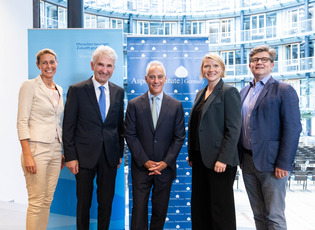
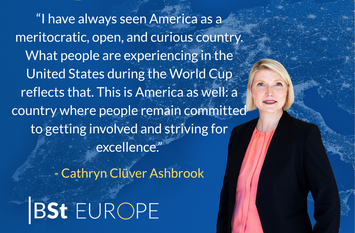
That shift does not make the transatlantic relationship less important. It makes clarity, resilience, and reliability within that relationship all the more essential. At a Bertelsmann Stiftung and Aspen Institute Germany event in Berlin, Ambassador Rahm Emanuel offered a candid assessment of U.S. foreign policy in conversation with Cathryn Clüver Ashbrook and Aspen’s Stormy-Annika Mildner. He called for clearer NATO priorities, stronger resilience, and more consistent U.S. engagement to rebuild trust with European and other allies.
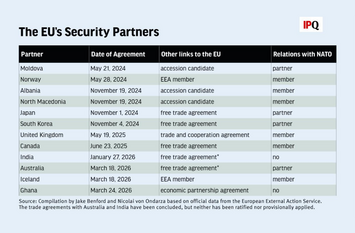
At the same time, Europe needs to diversify its security ties. The EU has concluded twelve security and defence partnerships in only two years. Jake Benford and Nicolai von Ondarza from the SWP examine in this article in IP Quarterly why these flexible arrangements matter, what they offer different partners, and how they could help establish Europe as a more capable global security actor.
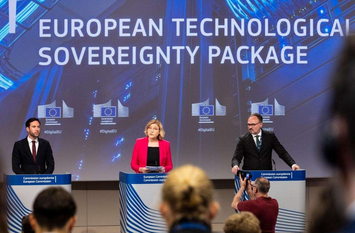
Technological resilience is another part of the same equation. Martin Hullin argues in his most recent op-ed that Europe will not achieve technological sovereignty by trying to match China or the United States on scale alone. Its distinctive advantage lies instead in trusted digital infrastructure built on transparency, interoperability, and democratic governance.
Finally, we are delighted to welcome Sir Ivan Rogers, the former UK Permanent Representative to the EU, as our new Non-Resident Senior Fellow. His extensive expertise and experience will greatly enrich our work.
Best wishes,
Malte Zabel
Director, Europe’s Future Programme