Dear Readers,
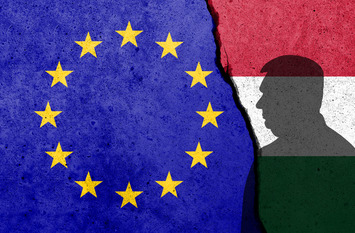
Hungary’s parliamentary election marks a significant moment for the European Union. After years of confrontation over rule of law and repeated blockages in key policy areas, the prospect of a new government in Budapest has been met with relief in Brussels. Expectations are high that this political shift could unlock decisions on Ukraine, Russia sanctions, and enlargement that have time and again been stalled.
Yet, as my colleague Florian Kommer argued in his recent piece, the EU is facing a narrow window of opportunity, with elections in France, Poland, Italy, and Slovakia in 2027 potentially bringing new veto players. At the same time, the incoming government in Budapest will be under significant domestic pressure. It will have to deal with the legacy of 16 years of Fidesz rule, including institutions shaped by political loyalists and limited administrative capacity, while facing urgent economic pressures. Restoring state capacity and unlocking frozen EU funds will be immediate priorities, creating opportunities for pragmatic engagement with Brussels, as I recently told Focus.
The question of how the EU can act more effectively despite internal divisions goes well beyond Hungary. Across policy areas, the EU continues to struggle to translate ambition into delivery, particularly in external action. A case in point are the US-Iran talks held in Pakistan last week: Despite the direct implications for Europe’s energy security and economic stability, the negotiations took place without meaningful European involvement, a symptom of limited European agency. What is needed now is more active European diplomacy, such as through building closer ties with mediating actors and engaging directly with the United States and Israel behind closed doors.
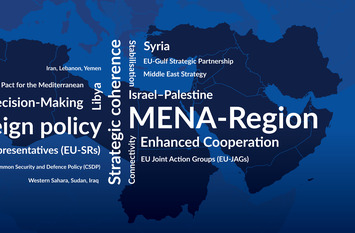
Looking more broadly at the MENA region, Christian Hanelt and Celine Plöger have analysed why the EU’s impact in the region remains limited, arguing that the core challenge lies less in a lack of instruments than in fragmented approaches among Member States, and outlining how more flexible use of existing tools could strengthen European action.
This gap between ambition and delivery also shapes the debate on the next MFF and the proposed Global Europe Instrument. As Anna Heckhausen and Katharina Staudte show, the Commission’s proposal seeks to make external funding more flexible and strategically aligned by consolidating programmes and shifting key decisions to the implementation phase, raising core governance questions about priorities, predictability and accountability that need to be addressed.
These debates unfold against a more challenging global backdrop. The new Bertelsmann Transformation Index 2026 shows a continued decline in democratic governance worldwide and challenges the supposed efficiency of authoritarian systems. As I argue in my recent LinkedIn post, democracies, including those in the EU, must prove they can deliver results, include all citizens, and offer credible answers in times of profound transformation.
Finally, as we continue to expand our work on European policy and strategy, we are currently looking for a Senior Advisor to join our team. If you are interested, we would be delighted to hear from you.
Best wishes,
Daniela Schwarzer
Member of the Executive Board