>


Dear Readers,

Hungary’s parliamentary election marks a significant moment for the European Union. After years of confrontation over rule of law and repeated blockages in key policy areas, the prospect of a new government in Budapest has been met with relief in Brussels. Expectations are high that this political shift could unlock decisions on Ukraine, Russia sanctions, and enlargement that have time and again been stalled.

Yet, as my colleague Florian Kommer argued in his recent piece, the EU is facing a narrow window of opportunity, with elections in France, Poland, Italy, and Slovakia in 2027 potentially bringing new veto players. At the same time, the incoming government in Budapest will be under significant domestic pressure. It will have to deal with the legacy of 16 years of Fidesz rule, including institutions shaped by political loyalists and limited administrative capacity, while facing urgent economic pressures. Restoring state capacity and unlocking frozen EU funds will be immediate priorities, creating opportunities for pragmatic engagement with Brussels, as I recently told Focus.

The question of how the EU can act more effectively despite internal divisions goes well beyond Hungary. Across policy areas, the EU continues to struggle to translate ambition into delivery, particularly in external action. A case in point are the US-Iran talks held in Pakistan last week: Despite the direct implications for Europe’s energy security and economic stability, the negotiations took place without meaningful European involvement, a symptom of limited European agency. What is needed now is more active European diplomacy, such as through building closer ties with mediating actors and engaging directly with the United States and Israel behind closed doors.

Looking more broadly at the MENA region, Christian Hanelt and Celine Plöger have analysed why the EU’s impact in the region remains limited, arguing that the core challenge lies less in a lack of instruments than in fragmented approaches among Member States, and outlining how more flexible use of existing tools could strengthen European action.

This gap between ambition and delivery also shapes the debate on the next MFF and the proposed Global Europe Instrument. As Anna Heckhausen and Katharina Staudte show, the Commission’s proposal seeks to make external funding more flexible and strategically aligned by consolidating programmes and shifting key decisions to the implementation phase, raising core governance questions about priorities, predictability and accountability that need to be addressed.

These debates unfold against a more challenging global backdrop. The new Bertelsmann Transformation Index 2026 shows a continued decline in democratic governance worldwide and challenges the supposed efficiency of authoritarian systems. As I argue in my recent LinkedIn post, democracies, including those in the EU, must prove they can deliver results, include all citizens, and offer credible answers in times of profound transformation.

Finally, as we continue to expand our work on European policy and strategy, we are currently looking for a Senior Advisor to join our team. If you are interested, we would be delighted to hear from you.

Best wishes,

Daniela Schwarzer

Member of the Executive Board

 
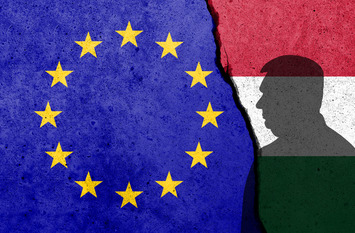
European and Hungarian flags

Analysis | How the EU Should Respond to Hungary’s Election: Two Scenarios

Hungary’s recent parliamentary election will have a major impact on the EU’s decision-making capacity and its direction on pressing foreign policy issues. With Tisza’s victory, certain moves become possible. This analysis by Florian Kommer outlines how Brussels can now act, and what could have been considered if the opposite outcome had come to pass.
Read more

EU-MENA Policy Brief

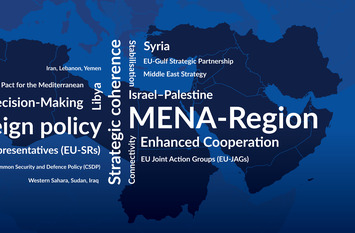
Policy Brief | Acting without Unanimity: How the EU Can Deliver in MENA

The EU’s challenge in MENA is not a lack of tools but a lack of cohesion between Member States. This policy brief by Christian Hanelt and Celine Plöger argues that Brussels can act more effectively without treaty change through existing flexibility, from Special Representatives and CSDP missions to economic instruments and smaller groups of willing states.
Read more

 
Planet Earth from Space EU Europe Countries highlighted.

Analysis | What’s Next for Global Europe? Unpacking the MFF Proposal

The EU’s proposed Global Europe Instrument marks a major overhaul of external action funding by consolidating programmes, boosting flexibility, and aligning spending with strategic interests, write Anna Heckhausen and Katharina Staudte. As negotiations advance, key questions remain over governance, predictability, and accountability in balancing flexibility with long-term priorities.
Read more

May 13 2024 year The rally on Rustaveli Avenue, the slogan of the rally is not against the Russian law.

Bertelsmann Transformation Index 2026

Democracy is in decline worldwide, with autocracies now dominating more than half of all countries assessed in the 2026 Bertelsmann Transformation Index (BTI). Yet authoritarian rule often fails to deliver effective governance, find project leads Sabine Donner and Hauke Hartmann. Protests, election swings, and reform efforts in countries like Poland and Brazil show that democratic forces remain strong and can re-emerge.
Read more

 
Job-Opening for Senior Advisor Bertelsmann Stiftung.

Job Opening | Senior Advisor for European Foreign Policy

We are seeking a Senior Advisor for European Foreign Policy to help shape Europe’s role in a rapidly changing world. Based in Berlin, the role will focus on strengthening EU resilience and global engagement by combining strategic leadership, policy development, and high-level outreach across key regions and stakeholders. The role requires a highly experienced senior professional with many years of relevant experience and a strong track record in European foreign policy.
Read more

Lucas Merlin Resende Carvalho

Keynote | Where Innovation Meets Scale: Unlocking the European Competitiveness Fund

At the Potsdam International Forum, Lucas Resende Carvalho argued that the European Competitiveness Fund could become a keystone of a coherent European industrial strategy by using public money more strategically, linking research strength to industrial scale-up, and turning Europe’s ideas into competitive advantage. He also cautioned that there is still substantial ground to cover in the negotiations if the ECF is to live up to that promise.
Read more


Stay tuned


Thank you for reading this edition of our BSt Europe newsletter!

Follow us on LinkedIn: linkedin.com/company/bst-europe

Follow us on Bluesky: bsky.app/profile/bst-europe.bsky.social