|
Dear Readers,
2026 has begun just like 2025 ended, with the further shattering of long-standing beliefs about the nature of the transatlantic partnership. As the US president and his closest collaborators are openly contemplating an invasion of the territory of a close NATO ally, policymakers all around Europe must grapple with the impossible scenario of countering such a move. My colleague Brandon Bohrn analysed the situation very well in an interview with Deutsche Welle.
At the same time, there is also still reason for hope. Case in point: right before the Christmas break, EU leaders reached an agreement on how to finance Ukraine over the next two years, and even Viktor Orbán did not stop it. Below, you will find a link to a longer explanation of this deal by yours truly. Meanwhile, my colleague Miriam Kosmehl and her co-authors have looked in detail at the accession process for Ukraine and how it resonates in member states. And as you will see in their short study, it is complicated but also not without hope.
The new year will bring a lot of challenges and opportunities for Europe to show that it is willing and able to act jointly in a wide range of policy areas, from trade to space and from industrial policy to its relations with the Gulf states, to only name a few. Our experts in the Europe programme at Bertelsmann Stiftung have compiled a comprehensive guide to the trends and points to watch this year. Make sure you give it a read.
This will be a tough year, maybe a decisive year for Europe’s future. We will do our best to make a meaningful contribution with deep analyses and well-designed policy proposals. On behalf of everyone working on European matters here at Bertelsmann Stiftung, let me wish you a happy new year and thank you for following our work.
Best wishes from Berlin,
Lucas Guttenberg
Director, Europe’s Future Programme
|
|
|
|
|
|
What will shape Europe and the world in 2026? From geoeconomic pressure and Ukraine to China’s industrial push, EU alliances, the single market, security, space and the US midterms, our experts map key trends to watch in 2026 that will test Europe’s security, competitiveness and capacity to act.
|
|
|
|

|
|
|
|
|
|
Analysis | How the EU Secured €90 Billion for Ukraine
The EU agreed on €90 billion in new support for Ukraine—without a Hungarian veto. This thread by Lucas Guttenberg explains how leaders revived a Commission proposal to borrow against the EU budget, why Orbán ultimately went along, and how enhanced cooperation, frozen Russian assets, and budget politics shape what happens next.
Read more
|

Study | Charting Ukraine’s EU Path: Engaging with Member States
Ukraine’s EU accession has become a central test case for enlargement under unanimity. This new study, co-authored by our colleague Miriam Kosmehl, analyses the domestic political constraints shaping national positions on Ukraine’s accession, identifies key obstacles in selected countries, and assesses policy instruments that could gradually build consensus and enable progress.
Read more
|
|
|
|
|
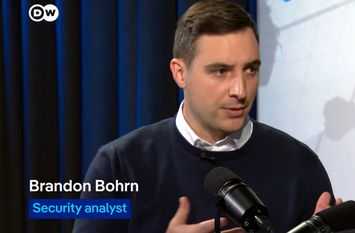
Interview | From Venezuela to Greenland, How Far will Donald Trump Push US Power?
After the US raid to capture Venezuela’s leader Nicolás Maduro, Washington is openly threatening military action against multiple states. On this episode of DW News, Brandon Bohrn explains whether Trump is abandoning the rules-based order, what his so-called “Donroe Doctrine” means in practice, and how allies, rivals, and Latin America are responding to a far more confrontational US posture.
Watch here
|
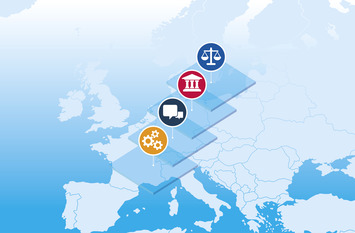
Policy Brief | European Public AI
The European Union is increasingly complementing AI regulation with a stronger focus on investment and deployment. In this policy brief, Felix Sieker and Alek Tarkowski assess three major European Commission strategies – the AI Continent Action Plan, Apply AI Strategy, and Data Union Strategy – through a Public AI lens and offer recommendations to strengthen Europe’s approach to compute, models, and data.
Read more
|
|
|
|
|
|
|
|
|
|
|
|
|
|
|
|
|
|




