>


Dear Readers,

When a Shahed-type drone struck a British airbase in Cyprus last week, the US-Israeli war on Iran reached Europe. While capitals remain divided over the political and legal implications, the escalating conflict is affecting European security and economic interests. Across the Middle East and the Eastern Mediterranean, European states are helping to defend partners, infrastructure and shipping routes while evacuating their citizens stranded in the region. 

The crisis exposes structural weaknesses of European foreign policy: a lack of strategic unity, limited military instruments and a widening gap between Europe’s normative ambitions and geopolitical realities. In the immediate conflict, Europe’s room for influence is limited. Its most important contribution may come later, through diplomatic engagement and efforts to rebuild a more inclusive regional security framework. 

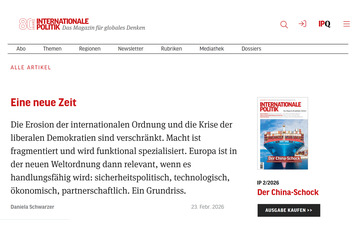
Yet the escalation also raises the broader question of how Europe can remain relevant in a fragmented international system where rules are increasingly contested. In a contribution to the latest issue of Internationale Politik, I argue that Europe’s influence in such a world will depend on strengthening its economic, technological and security capabilities while building effective partnerships.

The Iran war is another test to Europe’s economic resilience. With the Persian Gulf effectively closed and disruptions affecting global LNG supply, European gas prices have surged to their highest level since 2023, adding to an already urgent debate about Europe’s high energy costs.

Addressing the broader competitiveness challenge has been high on the EU agenda since the start of the current legislative term. Last week, the Commission presented its long-awaited proposal for the Industrial Accelerator Act, aimed at strengthening Europe’s industrial base in an increasingly contested global economy. The proposal links public procurement in strategic sectors to value added in the EU and trusted partner countries.
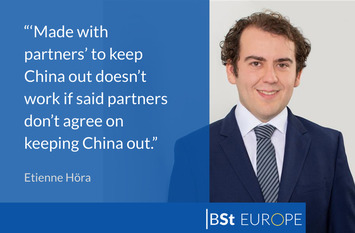
As my colleague Etienne Höra notes, while this approach is intended to limit competition, particularly from Chinese firms, China’s expanding manufacturing footprint abroad could complicate this objective.

Looking ahead, next week’s European Council will take place against an exceptionally demanding agenda. Leaders will not only address the fallout of the Iran war and the pressures on energy markets, but also continue discussions on support for Ukraine’s defence, reconstruction and EU accession path. We will follow these debates closely and share our analysis in our next newsletter edition.

Finally, we are delighted to welcome Florian Kommer to our Europe Program as Senior Expert for European Strategic Issues. Florian previously worked at the German Federal Foreign Office, serving as deputy chief of staff to the former Minister of State for Europe Anna Lührmann. We are very happy to have him on board!

Best wishes,

Daniela Schwarzer

Member of the Executive Board

 
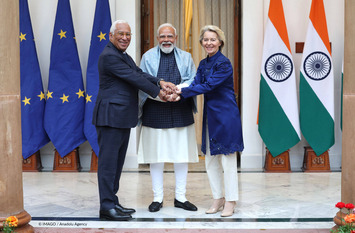
Indian European partnership

Analysis I Strengthening Indo–German AI Partnership in Delhi

Europe’s digital sovereignty cannot rely on regulation alone. As AI, semiconductors and cloud infrastructure reshape global power, closer cooperation with India offers a strategic pathway to strengthen resilience, expand innovation capacity and shape a democratic, multipolar digital order writes Murali Nair from the AI Impact Summit in New Delhi.
Read more

Colours of blue and yellow.

Paper I Charting Ukraine's EU Path

Ahead of the 19 March European Council where enlargement will feature, Miriam Kosmehl convened a Brussels roundtable on her paper “Charting Ukraine's EU Path: Engaging with EU Member States” with Ukraine Prism, LibMod and SWP. With experts from EU institutions, Member States’ Permanent Representations and Ukraine’s Mission to the EU, on 5 March they discussed Ukraine’s deeper EU integration. 
Read more

 
Photo with Etienne Höra

Thread | Can the Industrial Accelerator Act Keep China Out?

After the Commission unveiled the Industrial Accelerator Act (IAA), Etienne Höra examines how the proposal seeks to strengthen European industry and limit Chinese competition by linking public procurement in strategic sectors to value added in the EU and trusted partner countries. Yet Chinese firms increasingly manufacture abroad, raising questions about how effective these conditions would be. 
Read more

Screenshot about Text from Daniela Schwarzer in Internationale Politics

Analysis | Keeping Europe Relevant in a Fragmented World

In Internationale Politik, Daniela Schwarzer argues that the erosion of the international order and the crisis of liberal democracies are deeply intertwined. As power becomes more fragmented, Europe’s influence will depend on becoming more capable at home and abroad, strengthening its security, technological and economic capacity while building partnerships. 
Read more

 
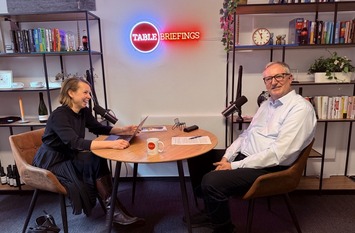
Christian Hanelt at the table briefing.

In the news I What Comes Next in the Iran Conflict?

Christian Hanelt joins the Table Podcast to assess the current situation in the golf region. How long could the war last? How likely is a regime change in Iran? What role can Germany and Europe play? Hanelt discusses different scenarios and what they could mean for the wider region. Listen to the podcast.
Listen here

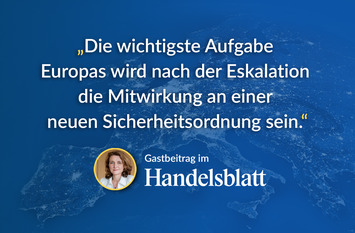
Quote from Daniela Schwarzer in Handelsblatt

Op-Ed | What Role Can Europe Play in the Iran War?

In Handelsblatt, Daniela Schwarzer argues that Europe has little influence over the course of the US-Israeli war on Iran. The crisis exposes familiar weaknesses in European foreign policy, including limited military tools and a lack of strategic unity. Europe’s most meaningful contribution may therefore come later: helping shape a broader regional security framework. (In German)
Read more


Stay tuned


Thank you for reading this edition of our BSt Europe newsletter!

Follow us on LinkedIn: linkedin.com/company/bst-europe

Follow us on Bluesky: bsky.app/profile/bst-europe.bsky.social